



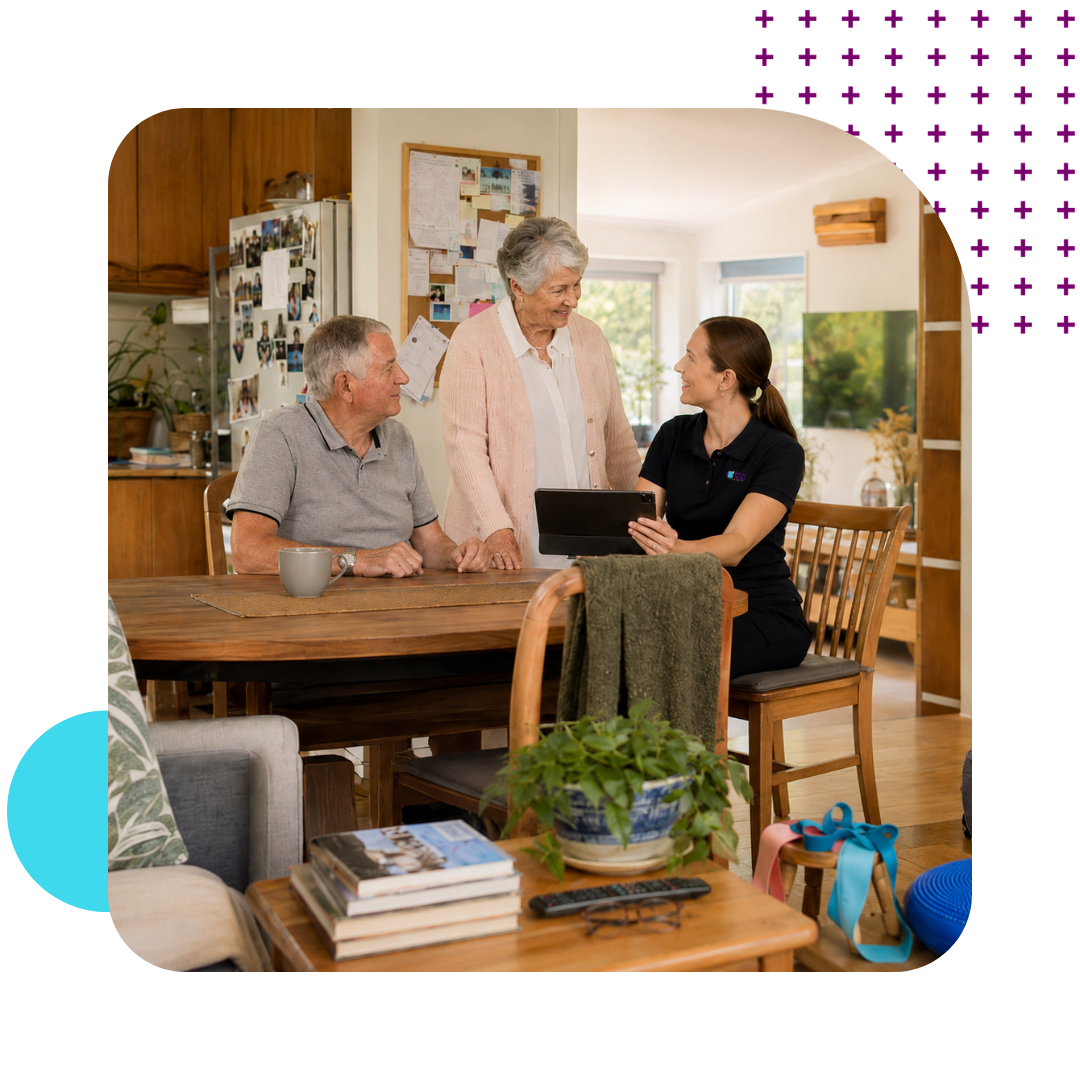
What Can I Get for My Support at Home Funding?
If you’re asking “What can I get for my Support at Home funding?”, you’re not alone.
It’s one of the first questions many older Australians and their families ask after receiving funding.
The good news is that your Support at Home funding can do much more than help with cleaning or personal care. Depending on your individual needs and care plan, it may also include allied health services that help you maintain your independence, improve your mobility, reduce your risk of falls and continue doing the things you enjoy.
Many people don’t realise that services like Occupational Therapy, Physiotherapy, Exercise Physiology and Speech Pathology are designed to help you stay living safely and independently at home for as long as possible.
This guide explains exactly what these services are, how therapists work with you and some of the lesser-known ways your funding may help you achieve your goals.
Quick Answer
Your Support at Home funding may fund Occupational Therapy, Physiotherapy, Exercise Physiology and Speech Pathology when these services support your ability to remain safe, independent and active at home. Therapy is personalised to your goals and may include assessments, treatment, exercise programs, equipment recommendations, home modifications, communication support and practical strategies that improve everyday living.
What’s on This Page
Find the information you’re looking for quickly.
- What is the Support at Home program?
- What can I get with my Support at Home funding?
- Occupational Therapy: Making everyday life easier
- Physiotherapy: Moving safely and staying mobile
- Exercise Physiology: Building strength for everyday life
- Speech Pathology: Supporting communication and swallowing
- 20 things you probably didn’t know your funding could help with
- How to get the most from your funding
- Questions to ask your Care Partner
- How Better Rehab therapists work with you
- Frequently Asked Questions
- How to choose Better Rehab as your allied health provider
At a Glance
If you want to… | The service that may help |
Stay living safely at home | Occupational Therapy |
Reduce your risk of falls | Physiotherapy |
Improve strength and mobility | Physiotherapy and / or Exercise Physiology |
Recover after illness or surgery | Physiotherapy and Exercise Physiology |
Make everyday tasks easier | Occupational Therapy |
Continue gardening or other hobbies | Occupational Therapy and Exercise Physiology |
Improve swallowing or communication | Speech Pathology |
Maintain your independence for longer | A personalised combination of allied health services |
Did you know?
Allied health isn’t only for people recovering from an injury or illness. Many people use their Support at Home funding to prevent problems before they happen, helping them remain independent and active for longer.
What Is the Support at Home Program?
The Support at Home program is designed to help older Australians continue living independently in their own homes and communities.
Rather than waiting until everyday tasks become difficult, the program focuses on providing practical support that helps you maintain your health, mobility and independence.
Depending on your individual needs, your funding may contribute towards services that help you:
- Stay safe at home
- Manage everyday activities
- Improve your physical function
- Remain active in your community
- Recover after illness or surgery
- Continue participating in the activities that matter most
For many people, allied health plays an important role in achieving these goals.
What Can My Support at Home Funding Be Used For?
The exact services available through your funding will depend on your assessed needs and care plan.
While every person’s circumstances are different, many people can access allied health services that support:
Staying independent – Maintaining your ability to complete everyday activities like dressing, showering, preparing meals and moving safely around your home.
Preventing falls – Improving balance, strength and mobility before a fall occurs so you can feel safe within the home and have confidence moving within your space.
Managing health conditions – Supporting people living with arthritis, Parkinson’s disease, osteoporosis, diabetes, stroke, heart conditions and many other health conditions through personalised therapy and exercise.
Recovering after illness – Helping you regain strength and function after surgery, a hospital stay or illness.
Staying connected – Supporting communication, swallowing and participation in everyday life.
The Difference Between Getting Help and Building Independence
One of the biggest misconceptions about aged care funding is that it’s only there to do things for you.
While practical support is important, allied health takes a different approach.
Rather than simply completing tasks on your behalf, therapists work alongside you to build your ability to do as much as possible safely and independently.
For example:
Instead of… | Your therapist may help you… |
Avoiding the stairs | Build the strength and balance needed to use them safely |
Giving up gardening | Find safer ways to continue gardening with the right techniques and equipment |
Living with ongoing pain | Learn strategies to move more comfortably and stay active |
Struggling with everyday tasks | Modify your home or recommend equipment that makes daily activities easier |
Stopping community activities | Improve mobility so you can continue attending social groups, shopping or visiting family |
This approach is often called reablement, and it’s centred around helping you maintain your independence rather than losing it.
At Better Rehab, this philosophy guides everything we do. Our clinicians focus on understanding what’s important to you and developing practical strategies that help you continue living life on your terms.
Why Allied Health Can Make a Big Difference
It’s easy to think therapy is only needed after something has gone wrong.
In reality, the greatest benefits often come from acting early.
Small changes today can help prevent bigger challenges tomorrow.
For example:
- An Occupational Therapist may recommend a simple grab rail that prevents a fall.
- A Physiotherapist may identify reduced balance before it leads to an injury.
- An Exercise Physiologist may help you rebuild strength after a hospital stay before muscle loss affects your independence.
- A Speech Pathologist may identify swallowing changes early, making meals safer and more enjoyable.
These aren’t just appointments.
They’re practical investments in helping you continue living safely at home.
Ask Yourself…
As you read this guide, think about your own daily life.
- Are everyday tasks becoming more tiring?
- Have you had a near miss or a fall recently?
- Is it becoming harder to get in and out of chairs?
- Have you stopped doing activities you once enjoyed?
- Are you avoiding certain foods because swallowing feels difficult?
- Is pain limiting your movement?
- Would you like to stay in your own home for as long as possible?
If you answered yes to any of these questions, allied health may be able to help.
The following sections explain exactly how each therapy works and how Better Rehab clinicians partner with you to achieve meaningful goals that support your independence and quality of life.
Next Up: Occupational Therapy
Many people think Occupational Therapy is simply about recommending equipment.
In reality, Occupational Therapists are experts in helping people overcome everyday challenges, whether that’s making your home safer, simplifying daily tasks or helping you continue the hobbies and routines that matter most.
In the next section, we’ll explore exactly how an Occupational Therapist works with you, what happens during your appointments and some of the surprising ways Occupational Therapy can help you get more from your Support at Home funding.
Occupational Therapy: Helping You Stay Independent at Home
When people hear Occupational Therapy, they often think it’s just about equipment or home modifications.
In reality, Occupational Therapists are experts in helping people continue living safely and independently by making everyday activities easier.
Whether you’re finding it harder to get dressed, prepare meals, enjoy your garden or move safely around your home, an Occupational Therapist works alongside you to identify what’s getting in the way and develop practical solutions that fit your lifestyle.
At Better Rehab, our Occupational Therapists focus on what matters most to you. Every recommendation is personalised to your goals, your home and the way you want to live.
How an Occupational Therapist Works With You
No two people have the same goals.
That’s why your Occupational Therapist starts by getting to know you before recommending any changes.
Rather than arriving with a checklist, they’ll take the time to understand:
- What a typical day looks like
- The activities that are important to you
- Tasks that are becoming more difficult
- Any health conditions affecting your daily life
- Your home environment
- The support you already have in place
- What you’d like to keep doing independently
This assessment forms the foundation of your therapy plan.
Together, you’ll identify realistic goals and develop practical strategies that help you continue living safely and independently.
What Happens at Your First Appointment?
Many people aren’t sure what to expect during an Occupational Therapy visit.
Your first appointment is usually relaxed and conversational.
Your therapist may:
- Ask about your medical history and current health
- Discuss your daily routine
- Observe how you complete everyday activities
- Assess your mobility around the home
- Identify any safety risks
- Talk about your goals for the future
- Answer any questions you or your family may have
Because Better Rehab delivers community-based services, this assessment often takes place in your own home where recommendations can be tailored to your everyday environment.
Did you know?
The best Occupational Therapy assessments don’t just focus on what you’re finding difficult today. They also help plan ahead, making small changes now that may help you remain independent for longer.
What Can an Occupational Therapist Help With?
Occupational Therapy is about much more than recommending equipment.
It’s about making everyday life work better for you.
1) Home Safety Assessments
One of the most valuable services an Occupational Therapist provides is assessing how safe your home is.
As we get older, even familiar environments can become more challenging to navigate.
Your therapist looks for practical ways to reduce risks while helping you remain independent.
This might include:
- Identifying trip hazards
- Improving lighting
- Rearranging furniture to create safer walkways
- Suggesting safer bathroom layouts
- Recommending handrails or grab rails
- Improving access to frequently used areas of your home
Often, small changes can make a significant difference to your safety and independence.
2) Making Everyday Activities Easier
Sometimes it’s not your health that’s stopping you from doing something.
It’s the way the task is set up.
Occupational Therapists look at how you complete everyday activities and suggest practical ways to make them easier.
This may include:
- Preparing meals
- Showering safely
- Getting dressed
- Laundry
- Housework
- Using the bathroom
- Reaching high cupboards
- Carrying shopping
- Getting in and out of bed
- Standing up from your favourite chair
Rather than taking over these activities, your therapist works with you to help you continue doing as much as possible yourself.
3) Assistive Technology and Equipment
Many people are surprised by the range of equipment available to support everyday independence.
Occupational Therapists don’t recommend equipment for the sake of it.
Instead, they assess your needs and prescribe equipment that’s appropriate for your body, your home and your goals.
Examples may include:
- Shower chairs
- Toilet surrounds
- Over-toilet frames
- Bed rails
- Transfer aids
- Dressing aids
- Reachers
- Sock aids
- Long-handled shoe horns
- Jar and bottle openers
- Kitchen aids
- Pressure care cushions
- Walking aids (in collaboration with other clinicians where appropriate)
Your therapist will also teach you how to use equipment safely and effectively.
4) Home Modifications
Sometimes a few changes to your home can make everyday life much easier.
Occupational Therapists assess whether home modifications may improve your safety and independence.
Depending on your needs, recommendations might include:
- Grab rails
- Handrails
- Ramps
- Step modifications
- Accessible showers
- Lever door handles
- Non-slip flooring
- Improved lighting
- Bathroom layout changes
If modifications are recommended, your therapist can work with your Support at Home provider and other professionals to help guide the process.
5) Energy Conservation and Fatigue Management
Living with arthritis, heart disease, chronic pain or other long-term health conditions can make everyday activities more tiring.
Occupational Therapists can teach strategies that help you use your energy more efficiently.
These may include:
- Planning activities throughout the day
- Organising your home to reduce unnecessary movement
- Breaking larger jobs into smaller tasks
- Using seated workstations where appropriate
- Learning safer body mechanics
- Prioritising activities that are most important to you
The goal isn’t to stop doing things.
It’s to help you keep doing them in a way that’s sustainable.
6) Helping You Continue the Activities You Love
One of the most rewarding parts of Occupational Therapy is helping people continue participating in meaningful activities.
These aren’t just hobbies.
They’re the things that give everyday life purpose.
Depending on your goals, your therapist may help you continue:
- Gardening
- Cooking
- Baking
- Looking after grandchildren
- Sewing or knitting
- Woodworking
- Painting
- Playing bowls or golf
- Walking your dog
- Volunteering
- Attending community groups
- Travelling
- Using computers, tablets or smartphones
Rather than focusing on limitations, Occupational Therapists focus on what’s possible.
Real Life Example
Margaret, 79
Margaret loved gardening but found bending, kneeling and carrying watering cans increasingly difficult.
Instead of giving up her favourite hobby, her Occupational Therapist visited her home and worked with her to identify practical solutions.
Together they:
- Recommended lightweight gardening tools
- Suggested raised garden beds
- Rearranged frequently used equipment
- Taught safer lifting techniques
- Reduced unnecessary bending
- Worked alongside Better Rehab’s Exercise Physiologist to improve lower limb strength and endurance
These small changes allowed Margaret to continue spending time in her garden while reducing strain on her joints.
Things You Might Not Realise an Occupational Therapist Can Help With
Many people are surprised to learn Occupational Therapy can also support:
- Preparing your home before mobility changes occur
- Choosing the right chair to make standing easier
- Learning safer ways to get in and out of the car
- Supporting you after giving up driving
- Planning for downsizing or moving house
- Making travelling easier
- Helping you safely care for your partner
- Setting up voice-controlled technology around the home
- Improving medication routines through environmental strategies
- Making hobbies easier with adapted equipment
- Preparing your home after returning from hospital
These proactive strategies often help prevent problems before they occur.
Myth vs Fact
Myth – Occupational Therapy is only needed after you’ve had a fall.
Fact – Many people work with an Occupational Therapist before problems arise. Early intervention can help reduce risks, maintain independence and make everyday activities easier before they become more challenging.
Ask Your Care Partner
If you’re interested in Occupational Therapy, consider asking:
“I’d like an Occupational Therapy assessment to see whether there are ways I can stay independent and continue living safely at home. Can Better Rehab provide these services through my Support at Home funding?”
Key Takeaways
Occupational Therapy isn’t about doing things for you.
It’s about helping you continue doing the things that matter most.
An Occupational Therapist can help you:
- Stay living safely at home
- Make everyday activities easier
- Reduce your risk of falls
- Recommend equipment that suits your needs
- Plan home modifications
- Continue hobbies and community activities
- Prepare for future changes before they become barriers to your independence
At Better Rehab, our Occupational Therapists take the time to understand your goals, your home and your lifestyle, delivering personalised support that helps you maintain your independence and enjoy everyday life on your terms.
Physiotherapy: Helping You Move Well, Stay Active and Live Independently
Whether you’re recovering after surgery, managing arthritis or simply noticing that everyday movement is becoming more difficult, Physiotherapy can play an important role in helping you maintain your independence.
Many people think you only need a Physiotherapist after an injury.
In reality, Physiotherapists work with older Australians every day to help prevent falls, improve mobility, manage pain and keep people doing the activities they enjoy for longer.
At Better Rehab, our Physiotherapists take a proactive approach, working with you in your home and community to understand how you move in your everyday environment and develop practical strategies that support your goals.
How a Physiotherapist Works With You
Physiotherapy isn’t about handing you a sheet of exercises and hoping for the best.
Your Physiotherapist works alongside you to understand how your body is affecting your everyday life and what changes will have the biggest impact.
Every treatment plan starts with a comprehensive assessment.
Your Physiotherapist may look at:
- How you walk around your home
- Your balance and stability
- Muscle strength
- Joint movement
- Pain or stiffness
- Your posture
- Endurance and fitness
- How easily you move from sitting to standing
- How safely you use stairs
- Whether you’re using the right mobility aid
- Your goals for the future
From there, they’ll create a personalised treatment plan designed around the activities that matter most to you.
What Happens During Your First Appointment?
Your first Physiotherapy appointment is focused on getting to know you.
Your Physiotherapist will spend time understanding:
- Your medical history
- Recent illnesses or hospital stays
- Previous injuries
- Current concerns
- Daily activities
- Any pain you’re experiencing
- The goals you’d like to achieve
They’ll also complete a physical assessment to better understand how your body moves.
Depending on your needs, they may observe:
- Walking indoors and outdoors
- Standing balance
- Sitting and standing
- Stair climbing
- Turning and changing direction
- Reaching and bending
- Getting into bed
- Getting in and out of the car
This helps your therapist develop recommendations that are practical, realistic and tailored to your everyday life.
Did you know?
Many balance problems develop gradually over time. Identifying changes early gives you the opportunity to improve strength and stability before a fall occurs.
1) Falls Prevention: One of the Most Valuable Reasons to See a Physiotherapist
Falls are one of the most common reasons older Australians lose their independence.
Fortunately, many falls are preventable.
Your Physiotherapist works to identify risk factors before they become serious problems.
This might involve:
- Assessing your walking pattern
- Improving balance
- Building lower limb strength
- Practising stepping over obstacles
- Improving reaction time
- Teaching safer movement techniques
- Recommending appropriate walking aids where required
Preventing just one fall can mean avoiding hospitalisation, surgery and a lengthy recovery.
2) Improving Strength and Mobility
It’s common to notice changes in strength as we get older.
Standing up from a chair may take more effort.
Walking longer distances may become tiring.
Carrying shopping might feel heavier than it once did.
Physiotherapists help address these changes through personalised movement programs that focus on improving everyday function.
Rather than exercising for the sake of exercise, every activity is linked to real-life goals.
For example:
Everyday Goal | Your Physiotherapist May Help You |
Walk around the shopping centre | Improve endurance and walking efficiency |
Climb stairs safely | Increase leg strength and balance |
Carry groceries | Build functional strength |
Walk on uneven footpaths | Improve stability and coordination |
Get out of low chairs | Strengthen hips and thighs |
Play with grandchildren | Improve flexibility, endurance and mobility |
3) Managing Pain Without Stopping Movement
Pain can make everyday activities feel overwhelming.
Many people assume the answer is simply to rest.
In many cases, the opposite is true.
Appropriate movement can help improve joint mobility, reduce stiffness and support better long-term function.
Your Physiotherapist may work with you to manage:
- Arthritis
- Neck pain
- Shoulder pain
- Back pain
- Hip pain
- Knee pain
- Persistent musculoskeletal conditions
Treatment may include:
- Gentle movement programs
- Strengthening exercises
- Balance training
- Manual therapy where appropriate
- Education about pain management
- Activity modification
- Advice for managing flare-ups
The aim isn’t simply to reduce pain.
It’s to help you keep moving safely and continue participating in everyday life.
4) Recovering After Illness, Surgery or Hospital
Returning home after a hospital stay can feel overwhelming.
You may notice reduced strength, lower energy levels or difficulty completing everyday activities that previously felt easy.
Physiotherapy supports your recovery by helping you gradually rebuild function.
Common reasons people access Physiotherapy include:
- Hip replacement surgery
- Knee replacement surgery
- Fractures
- Stroke recovery
- General deconditioning after illness
- Reduced mobility following hospital admission
Your therapist works closely with you to improve mobility safely while reducing the risk of setbacks.
5) Helping You Stay Active in Your Community
Physiotherapy isn’t only about what happens inside your home.
It’s also about helping you continue participating in your community.
Depending on your goals, therapy may support you to:
- Walk to your local café
- Attend community groups
- Visit family and friends
- Continue volunteering
- Go shopping independently
- Walk your dog
- Travel more comfortably
- Enjoy holidays with greater ease
These are the moments that help people stay connected and maintain their quality of life.
If you’re unsure whether physiotherapy could help, explore our guide on five signs it’s time to consider physiotherapy to understand when professional support may be beneficial.
Real Life Example
John, 74
John had stopped attending his weekly bowls club because he was worried about losing his balance on uneven grass.
After an assessment, his Better Rehab Physiotherapist identified reduced ankle strength and slower reaction times.
Together they developed a personalised program focused on:
- Balance exercises
- Walking on different surfaces
- Lower limb strengthening
- Improving turning and changing direction
Over time, John was able to return to bowls with greater stability and continue enjoying time with friends.
Exercise Physiology: Building Strength for Everyday Life
Exercise is one of the most effective ways to maintain health as we age.
But not every exercise program is right for every person.
Accredited Exercise Physiologists are university-qualified allied health professionals who design safe, personalised exercise programs based on your health conditions, physical ability and goals.
Rather than focusing on sport or fitness, Exercise Physiology focuses on helping you move more easily in everyday life.
At Better Rehab, our Exercise Physiologists create practical programs that fit your lifestyle and support you to remain active for longer.
How an Exercise Physiologist Works With You
Your Exercise Physiologist begins by understanding:
- Your health conditions
- Current activity levels
- Strength and mobility
- Balance
- Endurance
- Everyday challenges
- Personal goals
From there, they’ll develop a personalised exercise program that progresses at a pace that’s right for you.
Your program may take place:
- At home
- In your local community
- Outdoors
- Via telehealth where appropriate
Exercises are regularly reviewed and adjusted as your strength and mobility improve.
Exercise Designed Around Your Goals
Every exercise program is different because every person has different goals.
Your Exercise Physiologist might help you:
- Walk further without becoming tired
- Improve balance
- Increase leg strength
- Get up from the floor more easily
- Carry shopping
- Climb stairs
- Improve bone health
- Build endurance
- Reduce deconditioning after illness
The focus is always on improving your ability to complete everyday activities.
Supporting Long-Term Health Conditions
Exercise Physiology can play an important role in managing many chronic health conditions.
These include:
- Arthritis
- Osteoporosis
- Diabetes
- Parkinson’s disease
- Stroke
- Heart disease
- Chronic pain
- Respiratory conditions
Your Exercise Physiologist works alongside your healthcare team to ensure your program is safe and appropriate for your individual circumstances.
Did you know?
Exercise doesn’t have to mean going to a gym. Many programs use simple movements and equipment you already have at home.
Things You Might Not Realise Exercise Physiology Can Help With
Many people think Exercise Physiology is only about getting fitter.
In reality, programs can also support you to:
- Prepare for elective surgery
- Rebuild strength after hospital
- Maintain bone density
- Improve walking speed
- Increase endurance for holidays
- Carry grandchildren safely
- Continue gardening
- Stay active while managing chronic disease
- Reduce the effects of prolonged inactivity
- Maintain independence as you age
Myth vs Fact
Myth – Exercise is unsafe as you get older.
Fact – Appropriately prescribed exercise is one of the most effective ways to maintain strength, mobility and independence. Accredited Exercise Physiologists tailor programs to your health conditions, abilities and goals.
Ask Your Care Partner
You might ask:
“I’d like to improve my strength and mobility so I can continue living independently. Can I include Physiotherapy or Exercise Physiology through my Support at Home funding and choose Better Rehab as my provider?”
Key Takeaways
Physiotherapy and Exercise Physiology work hand in hand to help you stay active, mobile and independent.
Together, these services can help you:
- Improve balance and reduce your risk of falls
- Increase strength for everyday activities
- Recover after illness or surgery
- Manage pain through safe movement
- Stay active in your community
- Maintain mobility and independence for longer
At Better Rehab, our Physiotherapists and Exercise Physiologists deliver personalised, evidence-based support where it’s most meaningful, whether that’s in your home, your community or via telehealth where appropriate. Every program is tailored to your goals, helping you continue doing the things that matter most.
Speech Pathology: Supporting Safe Swallowing, Clear Communication and Everyday Connections
When most people hear Speech Pathology, they often think it’s only for children learning to talk.
In reality, Speech Pathologists play an important role in supporting older Australians to communicate, eat and drink safely, and continue participating in everyday life.
Whether you’re experiencing changes after a stroke, living with Parkinson’s disease, noticing your voice has become quieter, or finding meals more difficult to enjoy, Speech Pathology provides practical strategies that help you stay connected and independent.
At Better Rehab, our Speech Pathologists take the time to understand how communication and swallowing challenges are affecting your daily life. Together, you’ll develop personalised strategies that support your goals and help you continue doing the things that matter most.
How a Speech Pathologist Works With You
Speech Pathology sessions are tailored to your needs and goals. Every person’s communication, voice and swallowing needs are different.
Your Speech Pathologist begins by understanding:
- Your medical history
- Any recent illnesses or hospital stays
- Your current communication challenges
- Whether eating or drinking has become more difficult
- Your daily routines
- Your home environment
- Your goals for therapy
They’ll then complete an assessment and work with you to develop practical strategies that fit into your everyday life.
Depending on your needs, therapy may involve education, exercises, environmental changes, communication techniques or working closely with your family and support network.
What Happens During Your First Appointment?
Your first appointment is designed to help your therapist understand your individual needs.
This may include:
- Talking about your current concerns
- Discussing changes you’ve noticed over time
- Assessing your speech and communication
- Observing your voice quality
- Assessing swallowing where appropriate
- Understanding how communication affects your everyday activities
- Setting meaningful therapy goals together
If you’re receiving therapy at home, your Speech Pathologist can also observe the environment where communication and mealtimes naturally occur, making recommendations that are practical and personalised.
Did you know?
Changes to communication or swallowing often happen gradually. Seeking support early may help you maintain participation in conversations and make eating and drinking safer and more enjoyable.
1) Supporting Safe Swallowing
Eating and drinking are an important part of everyday life.
If swallowing becomes difficult, meals can become stressful instead of enjoyable.
Speech Pathologists assess swallowing and provide strategies that help reduce risks while supporting safe and enjoyable mealtimes.
You may benefit from an assessment if you:
- Cough while eating or drinking
- Feel like food gets stuck
- Take much longer to finish meals
- Avoid certain foods
- Experience frequent chest infections
- Have noticed changes following illness or stroke
Your therapist may recommend:
- Safer swallowing techniques
- Positioning during meals
- Strategies to make eating easier
- Advice about food and drink textures where appropriate
- Education for family members and carers
The goal is always to support safe swallowing while helping you maintain independence during meals whenever possible.
2) Supporting Communication
Communication is about much more than speaking clearly.
It’s about staying connected with the people around you.
Speech Pathologists work with people experiencing communication changes related to:
- Stroke
- Parkinson’s disease
- Dementia
- Neurological conditions
- Voice disorders
- Age-related communication changes
Support may include:
- Improving speech clarity
- Strengthening communication strategies
- Supporting word finding
- Developing alternative ways to communicate if needed
- Helping family members communicate more effectively
Every strategy is tailored to your individual needs and goals.
3) Voice Therapy
Some health conditions can cause your voice to become softer, weaker or more difficult for others to hear.
This can make conversations frustrating and lead people to withdraw from social situations.
Speech Pathologists can assess your voice and develop personalised strategies that help you communicate more effectively.
Depending on your needs, therapy may focus on:
- Speaking more clearly
- Improving vocal strength
- Reducing vocal strain
- Breathing techniques for speech
- Maintaining your voice during longer conversations
4) Supporting Cognitive Communication
Some people notice changes in memory, attention or processing that make communication more challenging.
Speech Pathologists can provide practical strategies to support participation in everyday conversations and routines.
This may include helping you:
- Organise everyday information
- Remember appointments
- Use diaries or technology effectively
- Develop communication routines
- Reduce frustration during conversations
- Support family communication strategies
The focus is on helping you continue participating in daily life as independently as possible.
Real Life Example
Helen, 81
After a mild stroke, Helen found conversations more tiring and often lost track of what she wanted to say.
Her Better Rehab Speech Pathologist worked with her to develop practical communication strategies, involved her family in therapy sessions and created techniques Helen could use during everyday conversations.
Together they also reviewed mealtime routines to ensure swallowing remained safe as she recovered.
By focusing on real-life situations, therapy helped Helen continue enjoying family gatherings and community activities.
20 Things You Probably Didn’t Know Your Support at Home Funding Could Help With
Many people only think about Support at Home when they need help with cleaning or personal care.
However, allied health can support many aspects of everyday life that help you remain independent for longer.
Here are some practical examples.
Occupational Therapy
- Learning safer ways to get in and out of the car
- Setting up your kitchen to reduce bending and reaching
- Choosing furniture that makes standing easier
- Preparing your home before mobility changes occur
- Recommending equipment that helps you stay independent
- Making gardening easier with adapted tools
Physiotherapy
- Improving your balance before a fall happens
- Walking more confidently on uneven ground
- Preparing for holidays that involve more walking
- Recovering strength after a hospital stay
- Improving mobility so you can continue shopping independently
Exercise Physiology
- Building strength before elective surgery
- Improving endurance to keep up with grandchildren
- Managing arthritis through personalised exercise
- Maintaining bone health with weight-bearing activities
- Reducing muscle loss after illness
Speech Pathology
- Making eating and drinking safer
- Improving communication after a stroke
- Supporting voice changes related to Parkinson’s disease
- Developing memory and communication strategies
- Helping families communicate more effectively
These services are always tailored to your individual needs, goals and approved care plan.
Myth vs Fact
Myth – Support at Home funding is only for cleaning, gardening and personal care.
Fact – Many people can also access allied health services that help maintain independence, improve mobility, support communication and reduce the risk of future health challenges when these services align with their assessed needs and care plan.
Getting the Most From Your Support at Home Funding
Your funding is there to help you live well at home, not simply respond when something goes wrong.
To make the most of your funding:
- Think about the activities that are most important to you.
- Ask questions about services you may not have considered.
- Seek support early rather than waiting until tasks become difficult.
- Review your goals regularly with your Care Partner.
- Choose experienced allied health professionals who understand healthy ageing and community-based care.
Small changes today can have a lasting impact on your independence tomorrow.
Questions to Ask Your Care Partner
If you’re planning your services, consider asking:
- Can allied health services be included in my care plan?
- Would Occupational Therapy help me stay independent at home?
- Could Physiotherapy help reduce my risk of falls?
- Is Exercise Physiology suitable for improving my strength and mobility?
- Would Speech Pathology benefit my communication or swallowing?
- Can I choose Better Rehab as my allied health provider?
- How can I make the most of my available funding?
Having these conversations early helps ensure your care plan reflects your personal goals and priorities.
Why Choose Better Rehab?
At Better Rehab, we believe the best therapy happens where everyday life happens.
That’s why our clinicians deliver personalised allied health services in your home, your community or via telehealth where appropriate.
Our Occupational Therapists, Physiotherapists, Exercise Physiologists and Speech Pathologists work together to understand your goals and develop practical strategies that help you remain independent, safe and active.
As a national, clinician-led allied health provider, we work collaboratively with participants, families, Care Partners and healthcare professionals to provide coordinated, evidence-based support that’s tailored to your individual needs.
Frequently Asked Questions
Can I choose Better Rehab as my allied health provider?
Yes, if you’re self-managed. Simply submit a referral to Better Rehab, and we’ll work with your Support at Home funding provider to help get your allied health supports set up. Our team can guide you through the process and answer any questions along the way. If your funding is fully managed by an aged care provider and you would like to access services through Better Rehab, please ask your care manager to contact us. We’ll work directly with them to arrange your supports and make the process as seamless as possible.
Can I receive therapy in my own home?
Yes. Better Rehab provides community-based allied health services, allowing therapy to take place where it’s most relevant to your everyday life.
Do I need a referral?
If you are self-managing your Support at Home funding, you can contact us directly to arrange services. A doctor’s referral is not required. If your funding is fully managed, your Care Partner or Support at Home provider can arrange the referral on your behalf.
Can I receive more than one type of therapy?
Yes. Many people benefit from a coordinated approach. For example, an Occupational Therapist may recommend home modifications while a Physiotherapist supports mobility, an Exercise Physiologist develops a personalised exercise program and a Speech Pathologist assists with communication or swallowing.
Is it better to start therapy before problems become serious?
In many cases, yes. Early intervention can help identify risks, maintain function and support your independence before everyday activities become more difficult.
The Bottom Line
Your Support at Home funding is about much more than receiving help around the house.
It’s an opportunity to invest in your health, mobility and independence so you can continue living safely and comfortably in the place you know best: your home.
Whether your goal is to reduce your risk of falls, improve your strength, recover after illness, communicate more easily or continue enjoying the activities you love, allied health can make a meaningful difference.
If you’re planning your Support at Home services, speak with your Care Partner about including allied health in your care plan and ask if Better Rehab can be your preferred provider for Occupational Therapy, Physiotherapy, Exercise Physiology and Speech Pathology.
The right support today can help you continue living life your way for years to come.
References and Sources
This article has been developed using current Australian aged care guidance and evidence-based allied health resources.
- Speech Pathology Australia. About Speech Pathology and Swallowing. https://www.speechpathologyaustralia.org.au
- Australian Commission on Safety and Quality in Health Care. Preventing Falls and Harm From Falls in Older People. https://www.safetyandquality.gov.au
- Australian Government Department of Health, Disability and Ageing. Support at Home Program. https://www.health.gov.au/our-work/support-at-home
- My Aged Care. Support at Home. https://www.myagedcare.gov.au
- Australian Physiotherapy Association. Choose Physio. https://choose.physio
- Exercise & Sports Science Australia (ESSA). Accredited Exercise Physiologists. https://www.essa.org.au
- World Health Organization. Integrated Care for Older People (ICOPE). https://www.who.int
- Better Rehab. Brand and Services Overview.


