



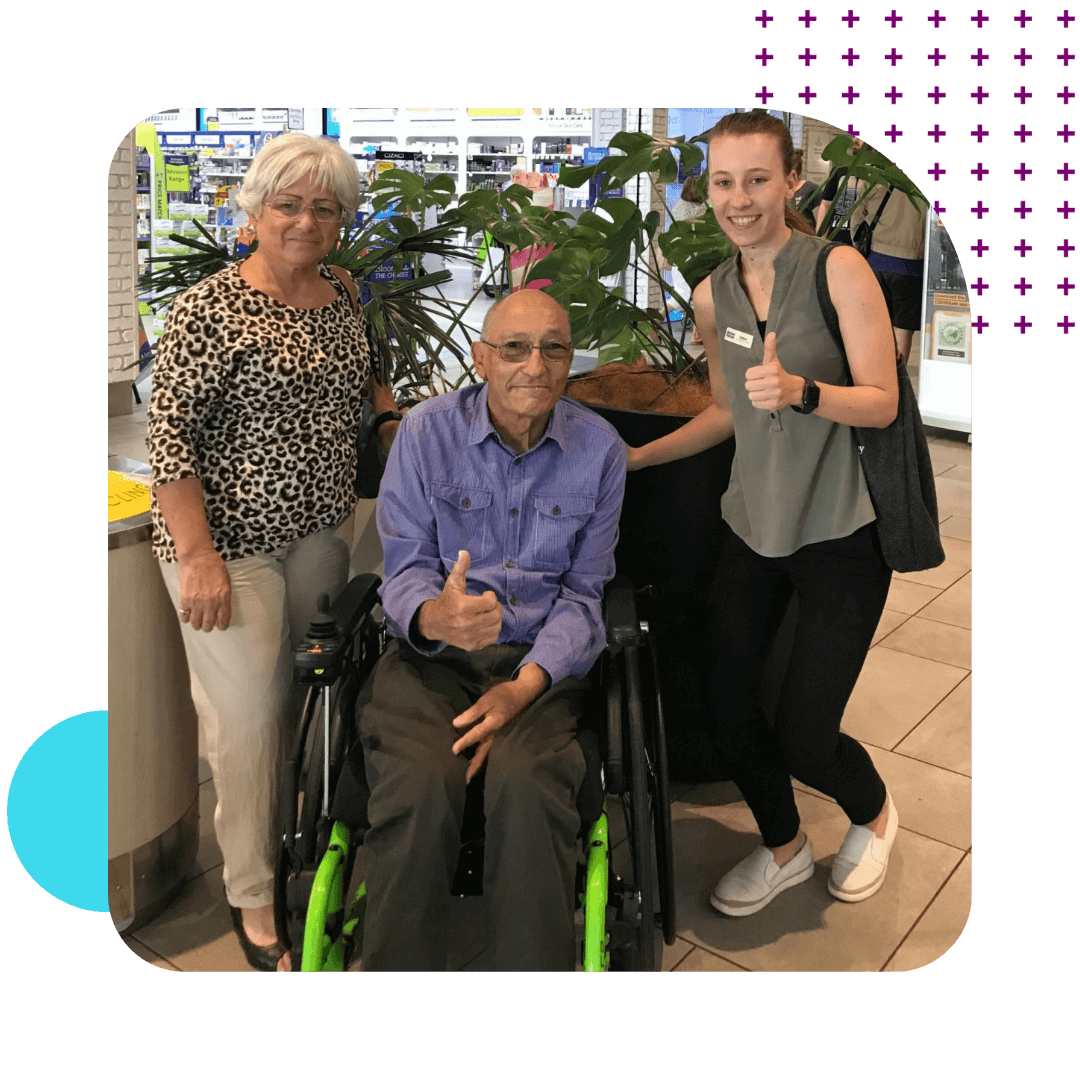
Assistive technology, or AT as it’s often called, is used by thousands of people every day, including around 8 out of 10 NDIS participants who access it through their plan funding.
AT can improve quality of life in many ways, by enabling participants to move around their homes or communities; to communicate and stay connected with others; to manage their personal care tasks independently; to study or to work. It can even help you exercise, play sports or play video games. In short, AT helps people do things and go places.
NDIS-funded AT encompasses a wide and constantly growing range of equipment, devices and technology, which the Scheme calls ‘assistive technology items’, including:
- Wheelchairs, scooters, and walking aids for improved mobility and independence.
- Communication devices such as symbol boards, tablets, software, speech-generating devices, specially designed keyboards, and hearing aids.
- Bathing and toileting items such as shower chairs, adjustable toilet seats, and bath transfer benches.
- Adapted kitchen utensils and gadgets and personal care aids.
- Transfer equipment including slide boards, hoist slings, and car transfer pads.
- Specially designed seating and beds including electric chairs, beds and bed hoists.
- Home modifications including hand and grab rails, access ramps, specialised taps and door handles.
- Prosthetics and orthotics.
What AT isn’t funded by the NDIS?
The scheme will generally consider funding AT items that are related to your disability, will improve your daily life, and help you do everyday activities and tasks.
The NDIS will usually not fund TVs, wristwatches, smart watches, and regular furniture or massage chairs, standard kitchen appliances, laptop computers, or cars.
5 steps to accessing AT through the NDIS
Step 1: Identify your needs
The first step to access AT through the NDIS is to identify your specific needs. You can do this by thinking about the daily activities you find challenging and the types of devices that could help you overcome these challenges.
If you are unsure what types of AT meet your needs, ask your allied health clinician, such as your occupational therapist, speech pathologist or physiotherapist, as they know your personal situation and functional goals and personal situation. In addition to recommending assistive equipment and devices, they can also enable you to trial them to ensure they are the right choice.
Step 2: Requesting a quote and report
Once you have identified the AT you require and completed a successful trial, the next step is to get a quote for the recommended AT item from an equipment provider.
For AT items that costs less than $1,500, you may need to provide your LAC or planner with the quote. The NDIS categorises items under $1,500, that are easy to set up and use as ‘low-cost’. Examples of such items include non-slip bathmats, walking sticks and basic shower chairs.
If you would like an AT that costs between $1,500 and $15,000, you will need a quote and a recent assessment or report from a qualified ‘assistive technology advisor’ that details the AT you need and why. AT assessors need a university degree relevant for providing AT assessments and can be allied health clinicians, such as occupational therapists, physiotherapists and speech pathologists, continence nurses, or rehabilitation engineers.
The NDIS categorises these AT items as ‘mid-cost’ and more difficult than low-cost items to select and set up on your own. Mid-cost items can include a standing hoist, orthotics, power wheelchairs, pressure-care mattresses and augmentative and alternative communication (AAC) devices.
And if you are asking for funding for an AT that costs over $15,000 – which the NDIS categorises as a ‘high-cost’ item – you will need a quote and a written assessment from an ‘assistive technology assessor’ outlining the support you need to set up this AT and the training you require to use it. The AT assessor can also identify the AT that will meet your support needs, consider your situation, and check that the AT you are requesting is safe for you to operate.
Like AT advisors, assessors include degree-qualified professionals, including allied health clinicians, psychologists, and rehabilitation engineers.
According to the NDIS, high-cost AT requires specialised knowledge to set up and can be customised. Examples of high-cost AT items include custom-made wheelchairs, communication devices, prosthetics, and ventilators.
Step 3: Secure funding for your AT
If your chosen AT item is already in your NDIS plan, you can proceed with its purchase, providing it is valued under $15,000 and you have your trial documented.
If you don’t have funding in your current NDIS plan, or your chosen AT item is valued at over $15,000, you need to submit an AT application with your quote and assessor report to the NDIS, either online via email at enquiries@ndis.gov.au or in person in a meeting with your LAC or NDIS planner.
Your LAC or NDIS planner will assess whether your requested AT is ‘reasonable and necessary’. This means that the AT must benefit you by reducing the impact of your disability and improving your ability to perform daily tasks, be suited to your individual needs and situation, be cost effective, and not funded by another government service.
If your request is approved, the NDIS will fund your AT under the ‘capital’ support category, and if you need help to purchase and set up your AT you will receive funding in your plan to have an AT advisor or assessor, such as your allied health clinician, assist you with AT selection and set up and provide training on its operation.
Step 4. Purchase or rent your AT
When your AT request is approved by the NDIS, you can use your plan’s funds to purchase or rent the equipment or device from a provider of your choice. You can also choose whether to manage your AT funds yourself or have the NDIS or plan manager perform this task.
The NDIS recommends buying or rent your AT from reputable suppliers who can assist you if you need to exchange or request a replacement or repairs.
Step 5: Using and maintaining your AT
Some AT equipment requires instruction on its use, to help you use it effectively, maximise its benefits and stay safe if it is a complex or high-risk item. In addition to recommending AT that best suits your needs and goals, it’s best practice for your allied health clinician to attend fitting and delivery appointments to also ensure you know how to use your AT and get the most out of it.
As with most pieces of equipment, particularly powered AT like power wheelchairs, scooters, power adjustable beds, and speech-generating devices, regular care and maintenance helps ensure they stay in good working order and safe to use.
AT providers usually provide information on how to maintain their products upon delivery. Before purchasing or signing a rental agreement, ask whether they provide a maintenance and/or repair service.
What to do when your AT needs change
When your AT no longer meets your needs, breaks down, or becomes dangerous to use, it’s best to act quickly so the situation is remedied quickly and you stay safe and supported by:
- Contacting the provider: If your AT equipment is under warranty, they can repair it or provide a replacement. They may also be able to provide information on replacement AT that will meet your new needs.
- Contacting your NDIS planner or LAC to let them know you need your AT repaired or replaced. The NDIS might have already provided some funding for a replacement AT in your ‘Capital – Assistive Technology’ budget. Alternately, your plan may need updating to accommodate a change in your AT needs. If your AT has broken or become unsafe to use, you need to provide your LAC or planner with a tax invoice, receipt or report from a repairer stating the item’s condition. You will also need to show them that you still require the AT, or if you require a different AT, provide them with a report outlining the reason from your independent AT advisors, such as your allied health clinician, as well as cost estimates for new AT that will meet your needs moving forward.
- Exploring temporary AT solutions: While you wait for your AT to be repaired or to secure a new AT, explore rental options to keep you supported. The NDIS provides funding to rent a temporary replacement AT, so discuss this with your LAC or planner.
Equipped with a better understanding of the NDIS’s requirements on accessing assistive technology, obtaining the AT that’s right for you can be an easier, smoother experience. Remember, your NDIS representative and allied health clinicians can all provide advice and assistance with funding requirements and choosing, securing and managing AT items.
If you need any more information or assistance on choosing AT that suits your needs and goals, don’t hesitate to reach out to your local Better Rehab clinicians by making an online referral, or calling us at 1300 073 422.


