



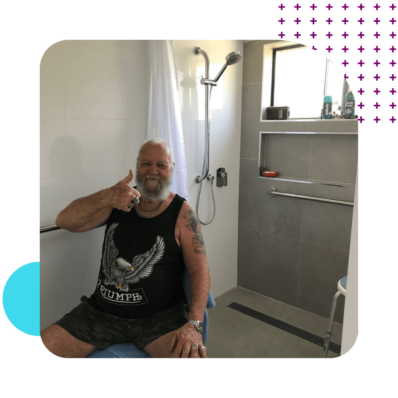
Home modifications, or home mods as they’re also called, are additions or changes to your home that increase your independence in daily activities.
From minor additions, like grabrails, threshold ramps, and handheld shower hoses, to custom-built changes to your home’s layout, such as widening of doorways and remodelling of bathrooms and kitchens, modifications can improve your quality of life by:
- providing greater comfort and ease of movement;
- improving your safety and reducing the risk of accidents and falls;
- reducing your dependence and reliance on family and carers;
- Increasing your independence in activities of daily living;
- and enhancing your ability to participate in social activities and hobbies.
Better Rehab’s occupational therapists work closely with people living with disabilities to provide them with options to perform their daily activities more comfortably, safely and independently – and one of these ways is through home modifications.
“Our OTs are qualified to provide advice and support to participants on modifying their homes to better meet their needs. They can help you choose the types of modifications that will enhance your independence and safety and ensure they are positioned and installed correctly. This applies to simple additions, like handrails and specially designed doorknobs, to more complex alterations, such as making a bathroom level-access and a remodelling a kitchen to put appliances, cookware and benchtops within easy reach,” explains Claire Ibrahim, Better Rehab’s National Clinical Lead, Occupational Therapy.
Making your home work for you: How our OTs help you modify your home
Better Rehab’s OTs specialise in home modifications and work closely with participants and their families to choose the modifications that will enhance their quality of life. Our OT’s can also obtain quotes from architects, builders, project managers and trades and once approvals from the NDIS are secured, will monitor the modification process to ensure it meets the needs of the participant.
“Your Better Rehab OT knows your strengths, challenges and goals, so they can recommend the home modifications that will enhance your independence and quality of life. And as qualified home modifications assessors recognised by the NDIS, they can provide support throughout the entire modification process,” explains Claire.
5 steps to creating a home that meets your needs
- Discovering your needs and goals: Your OT will talk to you about your daily routine, the challenges you experience when performing certain activities, and the tasks you’d like to perform with greater independence and safety. Your OT will also conduct a Functional Capacity Assessment, or FCA, which largely involves asking you questions and observing you doing your tasks and moving around your home.
- Conducting a comprehensive home assessment: Your OT will assess your home, including its accessibility, internal flow and layout, bathroom and kitchen design and setup, noting any safety risks and existing modifications, such as grab rails and ramps.
- Providing personalised recommendations: With a comprehensive understanding of your needs, daily routine, and home, your OT can now recommend the modifications that will enhance your life. They will walk you through what’s involved in their installation and can recommend local quality home modification providers. Your OT will also draw up a concept of works, which details the types of modifications and their position within your home, to obtain quotes from providers, such as building companies or tradespeople.
- Securing NDIS funding: Your OT will develop a home modifications report for the NDIA explaining why the recommended modifications are reasonable and necessary to include in your NDIS plan. This report will also include the concept of works and quotes from providers.
- Ensuring a successful result: With your NDIS funding approved, your OT can then work collaboratively with your interior designer, architect, project manager, builder and/or trades to ensure the modifications are installed and integrated into your home correctly and to your budget. This can include reviewing design plans and inspecting building work to ensure the modifications are positioned correctly and meet your needs, such as ensuring grab rails are secured at the right height and angle, access ramps are fully flush to entry floors and kitchen benches and cupboards are within easy reach.
Why Better Rehab partners with Shore Projects for home mods
Modifying homes for people living with disabilities often requires specialist expertise and a willingness to work collaboratively with participants and their OTs, which is why Better Rehab’s clinicians often turn to Shore Projects, an Australian design and construction firm that specialises in home modifications for NDIS participants in New South Wales, Queensland and Victoria.
“We manage home modifications from start to finish – from providing a quote to completion of work. Our in-house architects and building teams have extensive experience in a wide range of modifications and work closely with participants and their OTs throughout each project to ensure the modifications meet their specific needs. We’re always happy to explain what’s involved and work hard to make the process as easy and smooth as possible,” explains Shore Projects’ Director Zak Krcic.
Better Rehab’s Penrith-based OT Tilly Brinnand and Maroubra-based OT Faye Buckton recommend Shore Projects to NDIS participants due to their quality work, cost-effective quotes, and ability to work well with participants and their families.
“Rashid Elesh, a Director at Shore Projects, keeps affordability in mind when creating a quote. When the NDIS approves funding, he will ensure work is completed to a high standard and to budget and often goes the extra mile to ensure our participants are happy with results, such as creating tailored solutions, choosing designs that complement their interiors, and working with their home’s existing design.
“He’ll take the time to discover what they want out of the modifications and to discuss product and design options and explain the process. Our participants have found Rashid easy to talk to and understanding of their needs, from a disability perspective as well. He also understands how the NDIS works, while some builders get impatient with the time it takes to secure funding approval,” explains Tilly.
Integrating home mods into a new build
If you are building a new home, integrating your modifications at planning stage can be more cost-effective and aesthetically pleasing – and your new home will meet your specific needs from the moment you move in.
In this case, our OTs can work closely with you and your architect or design firm to ensure the successful integration of your modifications, which can include wide doorways and passageways, access ramps that are seamlessly integrated into entryways, level-access and spacious bathrooms, kitchens with easy-reach cabinets, benchtops and appliances, reinforced walls for grab rails, stair lifts, elevators, accessible switches and controls, home automation such as voice-controlled lights and blinds, and remote door openers and security systems.
The NDIS and home modifications
According to the NDIS, modifications fall into two categories: minor and major.
Minor home modifications don’t alter the structural parts of your home or are changes that cost less than $20,000. Minor home mods can include handrails, stair lifts, access ramps, the laying of non-slip tiles, and widening of internal doorways that don’t hold up or support other parts of the home. Despite being called ‘minor’, these modifications can have a big impact on your independence, mobility and safety.
Complex modifications involve internal structural work to your home and/or cost more than $20,000. They usually require plans, building approvals or permissions and certifications of work by trades, such as plumbers and electricians. Complex modifications can include widening doorways and hallways; installing a ceiling hoist; integrating a lift; remodelling a bathroom to make it level-access and enlarging it to accommodate mobility aids, a hoist, and/or shower chair; and remodelling a kitchen to improve usability and access.
“For complex home modifications, we will organise for the builder and/or architect to meet with participants to inspect their home and talk to them about their needs, preferences and lifestyle,” explains Tilly.
Every OT at Better Rehab believes it’s vital that participants’ homes are safe spaces that enhance their independence and overall quality of life: “Being able to move from room to room, bathe in private and make meals when you choose not only makes daily life more enjoyable but can boost confidence and self-esteem,” says Claire.
Ready to create a better home?
If your home isn’t meeting your needs, our OTs can provide advice and support throughout the entire home modification process, from helping you choose modifications that enhance your quality of life and securing NDIS home modification funding to choosing quality providers and ensuring they modify your home to meet your needs.
If you would like talk to your local Better Rehab OT about modifying your home, call us today on 1300 073 422 or make a referral via our website.


