



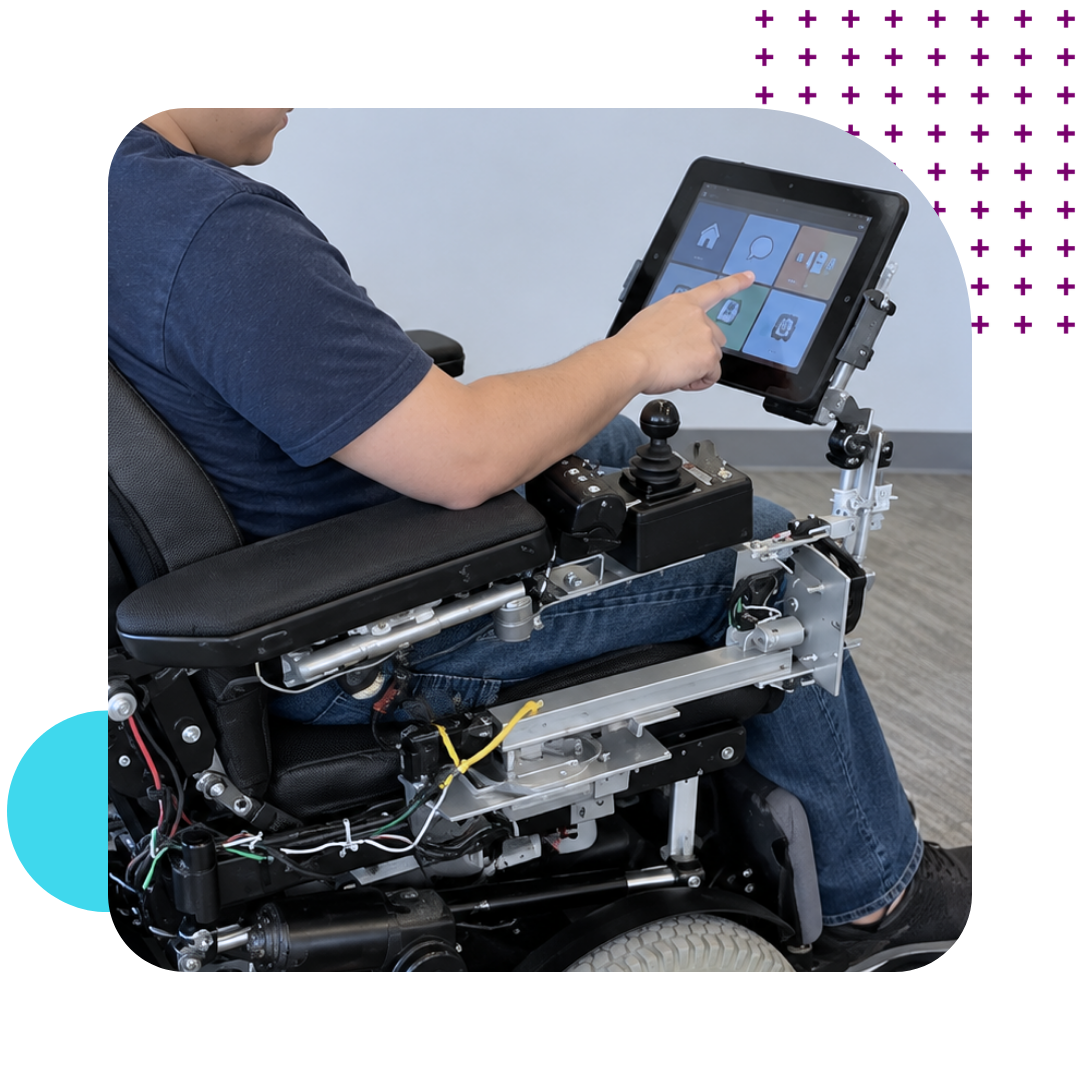
Your wheelchair goes everywhere you go. It affects how you sit, how you breathe, how your skin feels and how easily you get around. So when you need a new chair or a change to your seat, a good assessment matters.
A physiotherapy wheelchair assessment looks at your posture, your goals and your daily life. Then your physio finds a chair and seat that work for you. Physios can assess many kinds of equipment, and you can read more about physiotherapy and assistive technology in the NDIS. Here, we focus on wheelchairs.
Can a physiotherapist prescribe a wheelchair?
Yes. The NDIS says physiotherapists can assess high-cost assistive technology, along with occupational therapists, speech pathologists and rehabilitation engineers.
Physiotherapists have expertise in posture, movement and strength, as well as the long-term effects of sitting on comfort, function and overall health. This makes them well placed to lead wheelchair assessments, particularly when postural support, positioning or functional mobility are key considerations.
For Support Coordinators, this means a wheelchair referral does not always need to be directed to an OT. Consider the participant’s goals and needs, and select the clinician whose expertise is best suited to the assessment.
What happens during a physiotherapy wheelchair assessment?
A full assessment often involves more than one appointment, including the initial assessment, trials and fitting. The WHO wheelchair provision guidelines describe four steps for good outcomes: assessment, fitting, training and follow-up, done by trained staff. A physiotherapy wheelchair assessment follows the same steps.
Here’s what to expect.
Talking about your goals and daily life
Your physio will start by getting to know you. Where do you need to go? How long do you sit each day? Do you move in and out of your chair on your own or with help? Do you push your chair, drive it or have someone push it for you? Your answers shape every choice that follows. An AT assessment should explain how the item will help you reach your goals. It should also list any AT you’ve used before.
Postural assessment
Next, your physiotherapist will assess how you sit in your wheelchair and how well your current setup supports your body. They will look at the alignment of your head, trunk, pelvis and legs, and identify any issues such as leaning, sliding or becoming tired in certain positions. Good posture and positioning can improve comfort, breathing and participation in daily activities, while reducing the risk of skin problems and other complications.
The MAT assessment
MAT stands for mechanical assessment tool. It’s a hands-on assessment. You lie or sit on a firm mat or bed, and your physio gently moves your body to see how it responds. According to the NSW Agency for Clinical Innovation’s spinal seating modules, the MAT is used to:
- Check how far your joints move and whether they can change position, while you lie on your back
- Test possible changes to your posture while you sit
- Check your sitting balance and how much support you need
- Create clear records to set seating goals
This shows your physio which parts of your posture can be changed with support and which parts the seat needs to fit around. It helps them choose the right cushion, backrest and supports.
Pressure considerations
If you sit for a long time, pressure on your skin is a real risk. The Agency for Clinical Innovation says pressure injuries can happen in less than an hour. Even a small one can mean weeks of bed rest. Your physio will ask about any skin problems you’ve had. They’ll look at everything you sit or lie on, including your wheelchair, mattress, shower chair and car seat. Then they’ll recommend a cushion and seat that spread the pressure, and show you ways to take pressure off during the day.
Seating configuration
Once your physio understands your posture and skin needs, they work out the setup. This includes the seat size, the backrest, where your feet rest, the armrests and any side or head supports. Getting these details right helps you sit comfortably for longer, use your arms freely and feel steady when you move.
Mobility and access
A chair that fits your body also needs to fit your life. Your physio will think about how you’ll push or drive, how you’ll get in and out of the chair, and where you’ll use it. That might mean checking doorways and ramps at home, how the chair fits in a car or how you’ll manage at work, school or in the community. A manual chair, a power chair or power-assist wheels might suit different people and different goals.
Equipment trials
Before your physio makes a final recommendation, you’ll usually try the equipment. A trial lets you test the chair in real life, and lets your physio make changes. For items over $15,000, the NDIS may ask you to try or rent the item first so it can hear how it went. Trial details also make the assessment report stronger. A wheelchair may be funded when the NDIA decides it’s reasonable and necessary.
Reviews and follow-up
Your needs can change. Children grow, conditions change and your goals may shift. The WHO wheelchair provision guidelines include follow-up as one of the four core steps. Your physio can check your chair and seat, make changes and let you know when it’s time for a new assessment.
Who can assess wheelchair positioning?
A qualified allied health professional can assess wheelchair positioning. This is usually a physiotherapist or an occupational therapist. The right choice depends on your needs. When posture and movement are the main focus, a physio is often a good fit. For complex needs, a joint assessment is recommended.
At Better Rehab, our Physiotherapists do hands-on training in MAT assessments and wheelchair prescription. They get the same internal training as our Occupational Therapists. Find out more about our assistive technology physiotherapy and mobility assessments.
Signs it may be time for a wheelchair assessment
Consider asking for a review if you or the person you support:
- Slides forward, leans to one side or needs frequent repositioning
- Has new red marks or skin breakdown
- Gets tired, sore or uncomfortable after sitting for a while
- Has grown, or had a change in weight or health
- Finds it harder to push, steer or transfer
- Can’t access places they want to go in their current chair
Physiotherapists can assess and recommend manual and power wheelchairs, depending on your needs and goals.
Want to speak to us about this in more detail? Make a referral today to get started.
Sources
- What is mid-cost or high-cost assistive technology, NDIA, current as of 30 June 2026
- What is a general assistive technology assessment, NDIA, current as of 1 July 2026
- Wheelchair provision guidelines, World Health Organization, 2023
- Spinal seating modules, Module 3: Hands-on assessment, Agency for Clinical Innovation (NSW Health), updated June 2026
- Spinal seating modules, Module 8: The importance of pressure management, Agency for Clinical Innovation (NSW Health), updated June 2026