



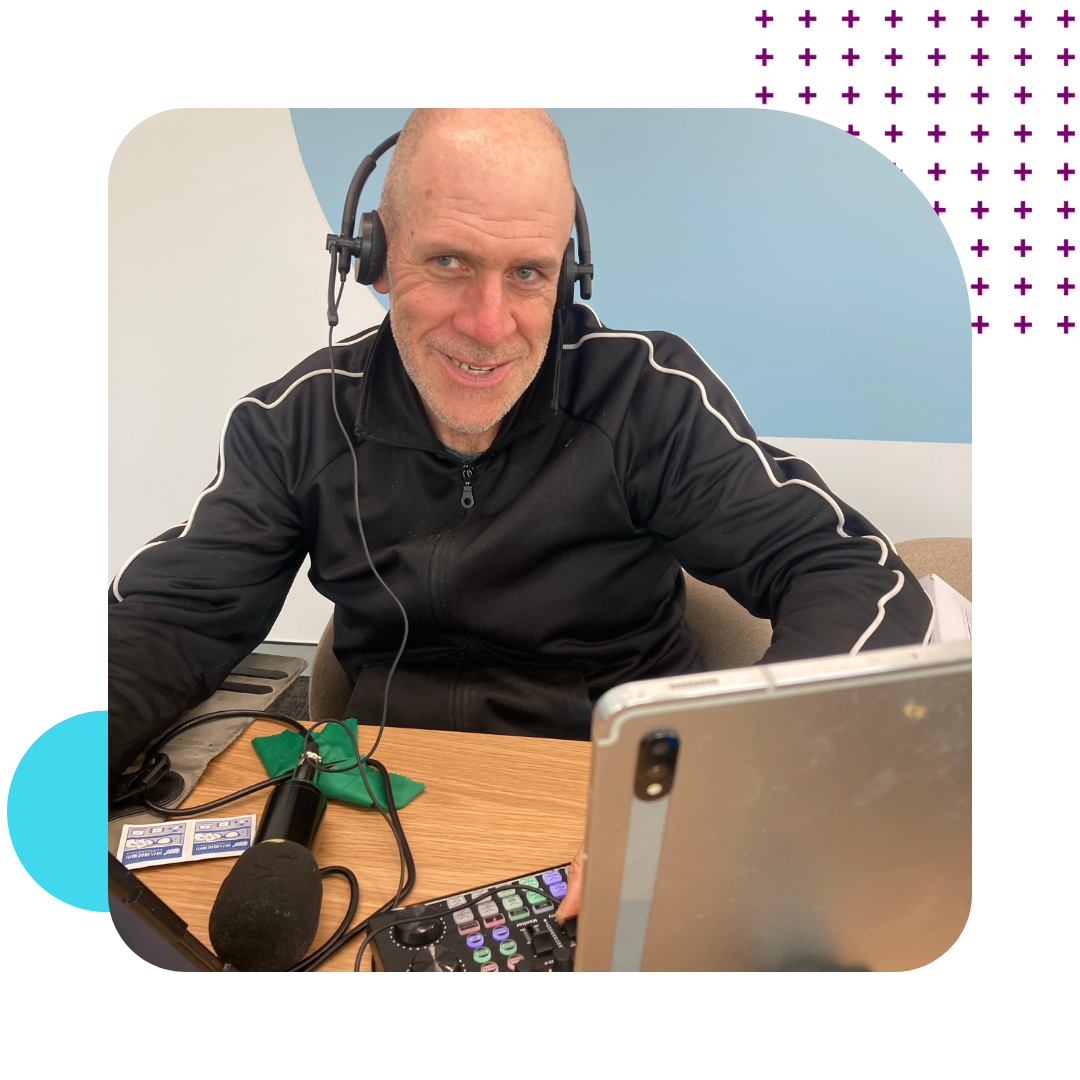
Marco has always loved sharing a good joke and making people laugh. Connecting with others is an important part of who he is, and with the support of Better Rehab speech pathologist Tara, he’s working towards communicating with greater confidence.
Living with Parkinson’s disease has brought changes to Marco’s voice and swallowing, but he’s continuing to find ways to stay connected with the people around him.
Through speech pathology, Marco is building a better understanding of how Parkinson’s affects his daily life, working towards meaningful goals and recognising the progress he’s making along the way.
When everyday conversations become a challenge
Marco’s journey with Parkinson’s began around 10 years ago, when he noticed a tremor in his left hand. His mum and a colleague encouraged him to get it checked, and after seeing a neurologist, he was diagnosed with early Parkinson’s disease.
Over time, other changes began to emerge, particularly with his speech. His voice was becoming quieter, and family and friends were often asking him to repeat himself or speak up. It was frustrating, especially when he knew exactly what he wanted to say but struggled to make himself heard.
He also noticed changes in his facial expressions, which sometimes made social situations more difficult. People would occasionally think he looked tired, even when that wasn’t how he was feeling.
“I’m a funny guy that likes joking around,” Marco shared. “So I found this quite challenging.”
While tremors and movement changes are often the first things people associate with Parkinson’s, the condition can also affect voice volume, facial expressions and communication. These changes weren’t simply about speaking more quietly. They were affecting how Marco interacted with others and expressed his personality.
Finding a Speech Pathologist who listens
When Marco’s mum first suggested speech pathology, he was open to giving it a try. But finding the right support wasn’t straightforward. After working with two speech pathologists, Marco eventually met Tara from Better Rehab, where he found an approach that involved him in decisions about his therapy and focused on what mattered most to him.
Marco’s experience showed him how important it was to find healthcare professionals who understood his needs and listened to what he wanted to achieve. It’s something he now encourages others to consider when looking for support.
When Tara asked what surprised him most about speech pathology, Marco spoke about being involved in decisions that were meaningful to him. He also appreciated the regular prompts and encouragement he received throughout his sessions.
Having a say in his therapy is important to him. Rather than focusing only on speaking louder, his sessions with Tara consider how communication affects his everyday life and what he wants to work towards.
That might mean being heard more easily when talking with family, having conversations with friends or being able to share a joke without constantly needing to repeat himself. These everyday moments help shape the direction of his therapy, keeping the focus on goals that feel relevant and meaningful.
Speech pathology is about more than speaking
One thing Marco hadn’t realised before starting speech therapy was that Parkinson’s could also affect his swallowing. It’s something that can surprise families, particularly when speech pathology is commonly associated with helping people communicate.
Alongside speech and language, speech pathologists also assess and support people who experience swallowing difficulties. For people living with Parkinson’s, changes in muscle movement and coordination can sometimes affect how safely and comfortably they eat and drink.
Marco has experienced some of these challenges himself. During mealtimes, he uses adapted cutlery, including a specially weighted spoon, to help with eating. He has also been working on his swallowing difficulties as part of his therapy.
When Tara asked about the changes he’d noticed, Marco shared that he felt his ability to swallow had improved. He was particularly pleased about experiencing fewer difficulties with choking, something that had been important to him.
These changes are meaningful because mealtimes are part of everyday life. Being able to enjoy food and participate in meals with others matters, and recognising progress in an area that had previously been difficult has been encouraging.
Swallowing difficulties can be complex, and support needs vary from person to person. A speech pathologist can assess an individual’s swallowing needs and recommend strategies suited to their circumstances.
Looking beyond speech to understand what matters
Marco loves making people laugh, sharing jokes and being part of the conversation. It’s a big part of who he is. So, when Parkinson’s began affecting his voice and facial expressions, it was especially frustrating. He wasn’t just finding it harder to make himself heard, but also to express his personality and connect with others in the way he always had.
His experience highlights why speech therapy is about more than practising exercises or improving voice volume. It’s also about understanding how communication difficulties affect someone’s relationships, routines and participation in everyday life.
Someone might want to speak more clearly during family gatherings, feel more comfortable ordering a coffee or find it easier to join conversations with friends. While the goals may look different for everyone, they’re often connected to the activities and relationships people value most.
This is why taking the time to understand the person behind the diagnosis is so important. Therapy becomes more meaningful when it reflects the individual’s priorities, preferences and experiences rather than focusing solely on their condition.
With Tara, Marco is involved in decisions about his therapy and receives encouragement as he continues working towards his goals.
Having the right people around you matters
Throughout his Parkinson’s journey, Marco has worked with several healthcare professionals, including a neurologist, psychologist, occupational therapist and speech pathologist. Having experienced different approaches to care, he’s become a strong advocate for finding professionals he trusts and feels comfortable working with.
Parkinson’s can affect several aspects of daily life, which is why support from different healthcare professionals can be valuable. Each clinician brings their own expertise, while working together can help ensure that therapy considers the person’s broader needs and goals.
At Better Rehab, our allied health clinicians take a person-centred approach, working alongside participants, families and other healthcare professionals to provide support that fits into everyday life. Learn more about Better Rehab’s speech pathology service.
This approach means looking beyond speech difficulties to understand how changes in communication and swallowing affect daily routines, relationships and the things someone enjoys doing. It’s about identifying meaningful goals together and building on progress at a pace that works for the individual.
Helping Marco keep being Marco
What makes Marco’s story so engaging is how openly he talks about his experiences. He doesn’t shy away from discussing the frustrating parts of living with Parkinson’s, from struggling to make himself heard to navigating changes in his facial expressions and swallowing.
At the same time, his sense of humour and personality come through in the way he shares his journey. He enjoys connecting with others, values the people around him and wants to continue participating in the conversations and activities that bring him joy.
With Tara’s support, Marco continues to work on his communication and swallowing goals, recognising the changes that matter to him along the way. His experience is a reminder that progress doesn’t always have to look like a major milestone. Sometimes, it’s noticing a difference during mealtimes, finding a healthcare professional who understands your needs or having an easier time getting your message across.
Speech pathology is about more than speaking louder. It’s about being heard, staying connected and having opportunities to express who you are.
Know someone who could benefit from speech therapy?
Our Speech Pathologists support people with communication and swallowing changes, including those related to Parkinson’s disease, send your referral here.


