



When you or a participant needs a wheelchair, hoist or other assistive technology, many people assume an OT is the only clinician who can help. However, physiotherapists can also assess and prescribe a wide range of equipment that supports mobility, positioning, transfers and respiratory function.
Knowing who can help matters. Fewer NDIS participants are getting assistive technology supports than a few years ago. AIHW data shows it dropped from 30% of participants aged 15 to 64 in late 2021 to 22% in April to June 2026.
This guide is for participants, families and support coordinators and explains the types of assistive technology a physiotherapist can assess and how to choose the right clinician to match specific goals and needs.
Can a physiotherapist prescribe assistive technology?
Yes. The NDIS lists physiotherapists as one of the health professionals who can assess and recommend assistive technology (AT). For high-cost AT, the NDIS says an assessor is “a suitably qualified allied health professional, such as an occupational therapist, physiotherapist, speech pathologist, or rehabilitation engineer.” The Australian Physiotherapy Association agrees. In 2025, it said a physio’s role includes “the prescription and adjustment of assistive technology.”
Physiotherapists have expertise in movement, posture, positioning and respiratory function. This knowledge enables them to assess how equipment interacts with you and recommend solutions that best support your functional needs and goals.
What assistive technology can a physiotherapist assess?
Here are six types of equipment a physio can often help with.
Wheelchairs and seating
You may spend many hours a day in your wheelchair. It affects how you sit, move and get out into your community. The WHO wheelchair provision guidelines say good outcomes come from four steps: assessment, fitting, training and follow-up, done by trained staff.
Physiotherapists are well placed to assess wheelchairs and seating, particularly where posture, positioning, movement and physical function are primary concerns. By evaluating how you move and use current equipment, they can recommend seating and mobility solutions that best support your health, comfort and functional goals.
Transfer aids, hoists and manual handling
Moving safely between a bed, wheelchair, toilet or vehicle can have a significant impact on independence, comfort and safety. If transfers become challenging, the risk of falls and injuries can increase for both you and your support team.
Physiotherapists assess mobility, transfer techniques and support requirements to identify the most appropriate equipment, such as hoists, transfer aids and adjustable beds. They can also write manual handling plans and provide training to promote safe and consistent support across all environments.
Standing frames and supported standing
Spending time in an upright position can be beneficial for some people who have difficulty standing on their own. A standing frame provides safe support while allowing participation in everyday activities, such as spending time at a table, joining family activities or interacting with others at eye level.
Your physiotherapist will assess whether a standing frame is suitable, set it up correctly and create a standing program tailored to your goals. They will also monitor progress and make adjustments as your needs change.
Respiratory equipment and cough assist devices
Respiratory health plays an important role in overall wellbeing and daily function. For some people with physical disabilities, respiratory complications and chest infections can have a significant impact on health. Research published in Developmental Medicine & Child Neurology found that respiratory disease is the leading cause of mortality in children with cerebral palsy.
Physiotherapists are highly skilled in assessing and managing respiratory function. They can assess breathing and cough effectiveness, provide strategies to support airway clearance, and recommend equipment such as cough assist devices to help maintain respiratory health and reduce the risk of complications.
Walking aids and everyday mobility equipment
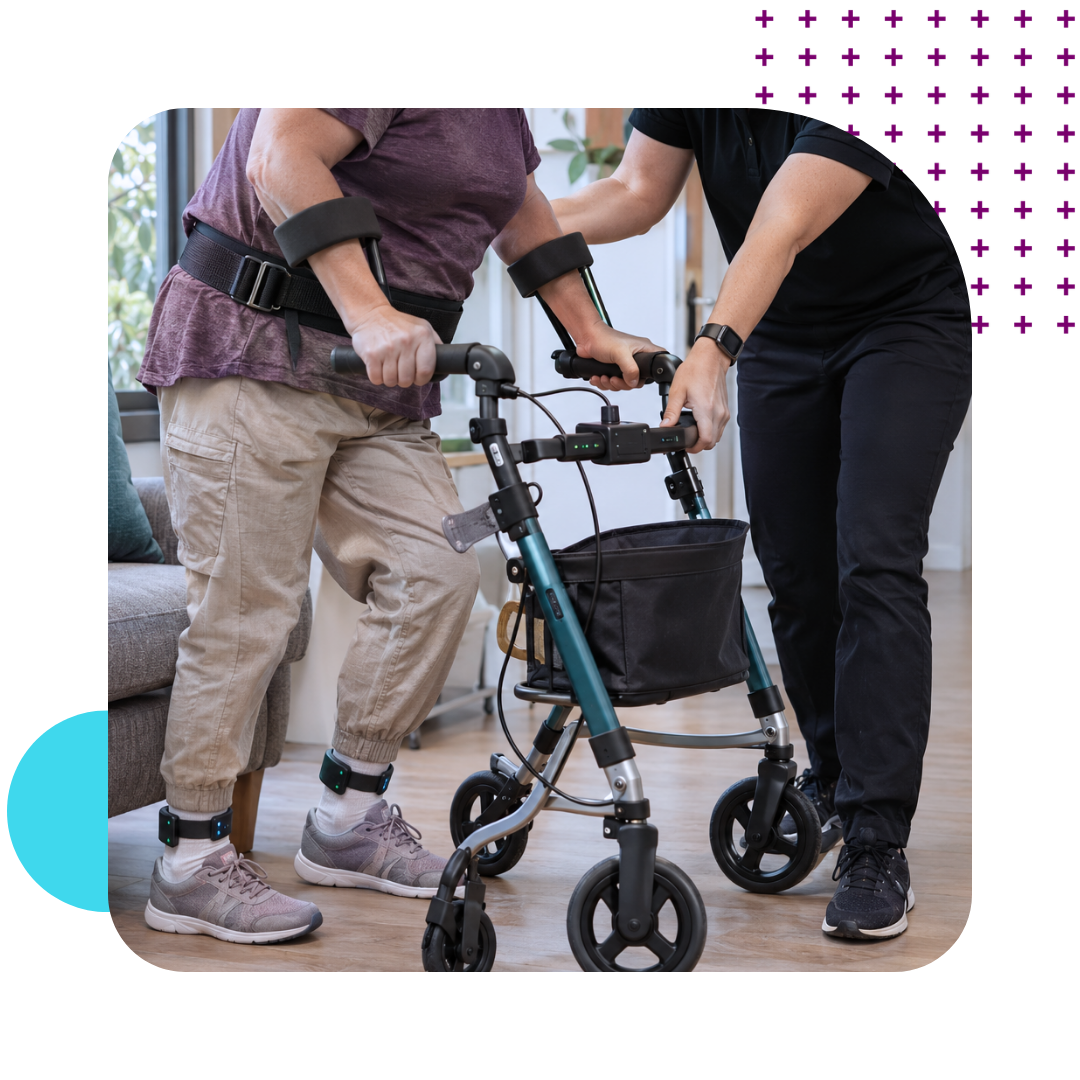
Walking sticks, walkers and other mobility aids can make everyday activities safer and easier. Although an NDIS assessment is not usually required for lower-cost items, choosing the right equipment is important to ensure it provides the support you need.
A physiotherapist can assess your mobility and balance, recommend the most appropriate walking aid, and make sure it is fitted correctly to support safe and independent movement.
Does assistive technology always require an OT?
No, OTs do a lot of great AT work, especially for daily tasks and changes to your home. But physios can help with AT too. The right clinician depends on what you need. Ask what the equipment is mostly for:
- If it’s about movement, posture, standing, transfers or Respiratory function, a physio may be the right person to lead.
- If it’s about daily tasks or changes to the home, an OT may suit you better.
- For complex needs, a joint assessment with both is recommended.
Choosing the right clinician from the start can help you avoid doubled-up assessments and make your NDIS funding go further. Our Physiotherapy vs Occupational Therapy guide explains how the two work together.
Signs a physio may be the right clinician for an AT assessment
A physiotherapy AT assessment may be worth considering if you or the person you support:
- Has had falls or near misses when walking or moving between positions
- Is finding transfers harder, or carers are struggling to help safely
- Has a wheelchair or seating system that no longer fits or feels uncomfortable
- Stays in one position for a long time, during the day or at night
- Has frequent chest infections or trouble clearing their chest
- Could benefit from a standing program as part of their goals
Want to speak to us about this in more detail? Make a referral today to get started.
How physiotherapy evidence supports NDIS AT decisions
The NDIS categorises AT based on its cost, with higher-cost items requiring more comprehensive evidence to support funding decisions. According to the NDIS:
- Items valued between $1,500 and $15,000 typically require advice or a recommendation from a suitably qualified health professional, such as a physiotherapist.
- Items valued above $15,000 generally require a comprehensive assistive technology assessment. In some cases, participants may also be asked to trial or hire the equipment before funding is considered, helping to demonstrate that the item is appropriate for their needs and goals.
Your physiotherapist’s AT report helps the NDIS understand why a particular piece of equipment is the right solution for you. The report links your disability, daily support needs and personal goals to the recommended assistive technology, explaining how it will improve your function, safety and participation in everyday life.
It should also include information about equipment you have used previously and how the new equipment will work alongside your other supports. This information helps the NDIS determine whether the recommendation meets the reasonable and necessary funding criteria.
At Better Rehab, our Physiotherapists do hands-on AT training with Clinical Leads and equipment suppliers. They get the same internal training as our Occupational Therapists. Learn more about assistive technology physiotherapy at Better Rehab.
Want to speak to us about this in more detail? Make a referral today to get started.
Sources
- NDIS participants claiming assistive technology supports, Australian Institute of Health and Welfare, updated October 2026
- What is mid-cost or high-cost assistive technology, NDIA, current as of 30 June 2026
- What is low-cost assistive technology, NDIA, current as of 31 August 2026
- What is a general assistive technology assessment, NDIA, current as of 1 July 2026
- Feedback on the NDIS Supports Rules, Australian Physiotherapy Association, 25 July 2025
- Wheelchair provision guidelines, World Health Organization, 2023
- Prevention and management of respiratory disease in young people with cerebral palsy: consensus statement, Developmental Medicine & Child Neurology, 2021