



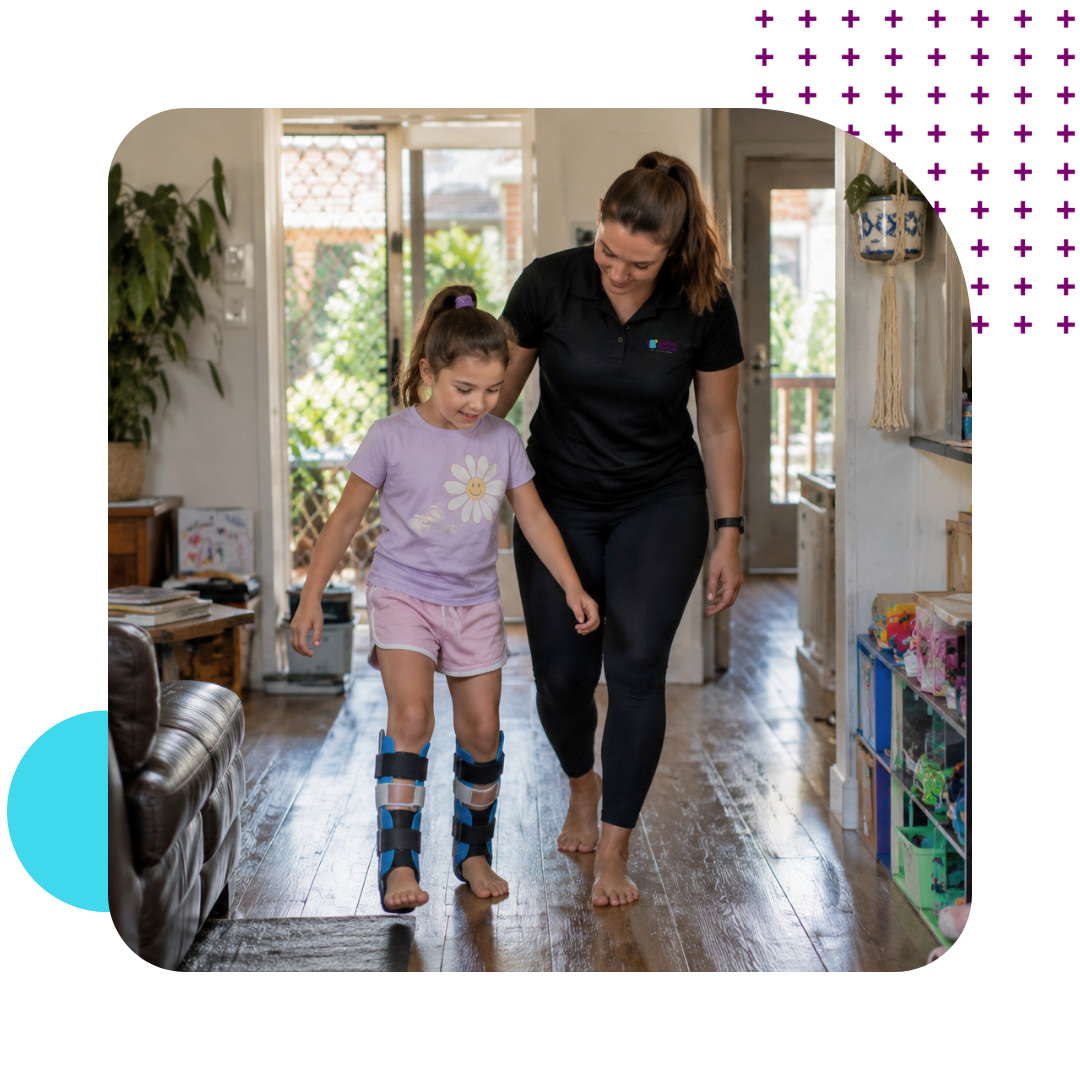
Every child develops at their own pace. For children living with disability or developmental challenges, paediatric physiotherapy in the NDIS can help them build physical skills, take part in the activities they enjoy and become more independent in everyday life.
At Better Rehab, our paediatric Physiotherapists work with children and their families to set goals and build a program that fits into the child’s daily routines, at home, at school and in the community.
This article explains what a paediatric physiotherapist does, when a child might need physiotherapy and what NDIS physiotherapy for children can support.
What does a paediatric physiotherapist do?
A paediatric physiotherapist helps children develop movement skills, improve physical function and join in the activities that matter to them. They assess how a child moves, set goals with the family, build an individualised therapy program, recommend equipment where it’s needed and show families practical ways to help their child practise skills between sessions.
Depending on your child’s needs, support may include:
- Gross motor development, such as rolling, sitting, crawling, standing, walking and moving between positions
- Strength, balance and mobility, including coordination, endurance and confidence with movement
- Everyday independence, such as transfers, moving around the home and taking part in school or community activities
- Equipment and assistive technology, including assessment, recommendations and help getting access to the right equipment
- Education for families and support workers, with practical strategies to help children practise skills and join in daily routines safely
What can physiotherapy support for children in the NDIS?
Children’s physiotherapy through the NDIS focuses on building capacity. In simple terms, that means helping your child develop the skills, confidence and physical abilities they need to become more independent.
Paediatric physiotherapy may help children with a range of disabilities, developmental delays and physical conditions, including cerebral palsy, genetic conditions, neurological conditions and complex physical needs.
Common goals include:
- Developing or maintaining movement skills
- Improving strength, balance, coordination and mobility
- Becoming more independent with transfers and everyday activities
- Taking part in play, school, sport and community activities
- Keeping comfortable positioning and physical function
- Finding equipment and assistive technology that supports mobility, safety and independence
Every child is different, so therapy is tailored to your child’s abilities, your family’s priorities and the goals you set together.
Building movement skills
Movement skills are the starting point for many other things a child wants to do. Learning to sit without support can make it easier to play with toys or eat at the table. Standing and walking can open up the playground, the classroom and time with friends.
Your child’s paediatric physiotherapist will look at where your child is now and what they want to work towards. Goals are specific so that everyone, including you, your child, your Support Coordinator and the clinician, can see whether therapy is making a difference.
Physiotherapy in your child’s everyday life
Physiotherapy works best when it connects with what your child already does and enjoys.
Sessions might involve:
- Practising standing while playing a favourite game
- Building balance through playground activities
- Developing walking skills for getting around at school
- Trying equipment that helps your child move around more independently
The aim is practical progress in play, learning and family life, not exercise for its own sake. Therapy is about helping your child take part, feel confident and enjoy a good quality of life.
Strategies for families and support teams
You see your child every day, so you play a big part in their progress. Our Physiotherapists work with families and support teams to build simple strategies into daily routines, so your child can keep practising skills between therapy sessions.
That might include ways to:
- Practise movement skills during play, bath time or getting dressed
- Position your child comfortably and safely during the day
- Help with transfers, such as getting in and out of a chair, bed or car
- Keep goals consistent across home, school and other supports
When everyone works towards the same goals, children have more chances to practise, and skills are more likely to carry over into everyday life.
Assistive technology for children
For some children, the right equipment can make a big difference to their independence, comfort and participation. Our paediatric Physiotherapists have significant experience with assistive technology. They assess your child’s functional needs and support equipment recommendations, which may include:
- Manual or powered wheelchairs
- Walking aids
- Positioning and postural support equipment
Our team thinks about how equipment will fit into your child’s whole day, at home, at school and out in the community. The goal is equipment that helps your child take part safely and practically in the things they want to do.
Many families don’t realise that a lot of mobility, positioning, standing and transfer equipment sits within physiotherapy’s scope of practice. At Better Rehab, our Physiotherapists complete face-to-face assistive technology training through the same internal education pathways as our Occupational Therapists.
When might a child need physiotherapy?
A child might need physiotherapy if they’re having trouble with movement or physical development, or if physical limitations make it hard to join in play, school or community activities. A referral may also help when a child’s equipment needs reviewing or when the family needs strategies to work towards shared goals.
You might consider a referral to a paediatric physiotherapist if your child:
- Has delays or difficulties with movement and physical development
- Needs support with mobility, strength, balance or coordination
- Finds it hard to take part in play, school or community activities because of physical limitations
- Needs a review of their current mobility or positioning equipment
- May benefit from assistive technology to support independence and participation
- Would benefit from strategies that help family and support teams work towards consistent goals
Talking to us early can help you find the right support, whether the priority is learning new skills, maintaining physical function or exploring equipment options.
How Better Rehab can help
Our paediatric Physiotherapists support children with a wide range of needs, and we have experienced clinicians in each state.
A key strength of our team is our assistive technology experience. It means we can look at both your child’s physical development and the equipment that may help them take part more fully in everyday life.
We work with families, Support Coordinators and other professionals to make sure therapy is individualised, practical and focused on outcomes that matter to your child.
Find out more about our Physiotherapy services or our paediatric services, or contact our team to talk about your child’s goals and how paediatric physiotherapy in the NDIS could help.


