



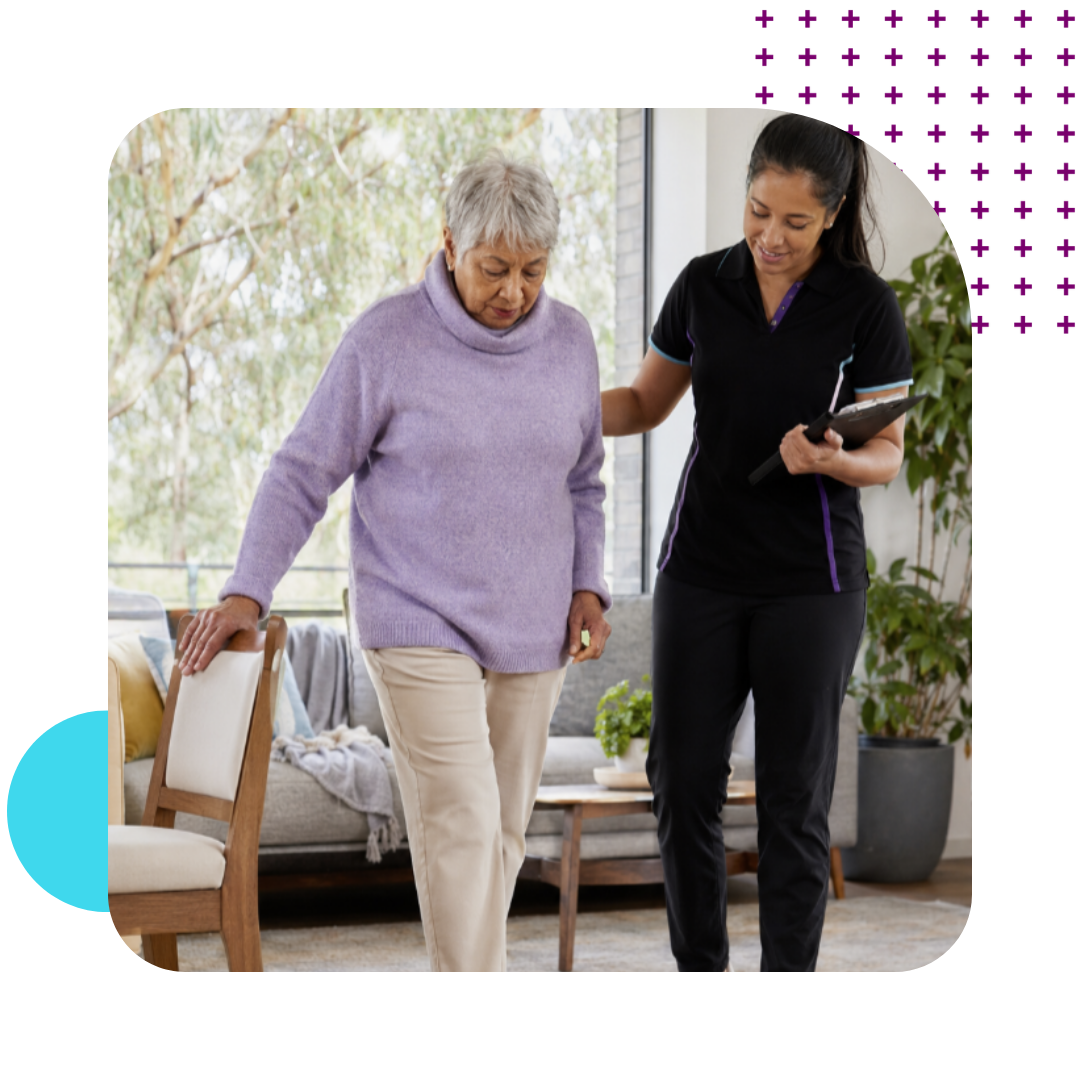
When Does Someone Need an OT Assessment?
As a Care Partner, it’s worth asking early: could an Occupational Therapy assessment help this person?
Most people only think of OT after a fall or a hospital admission. But OTs are just as valuable before things go wrong. They help people manage everyday activities like showering, cooking, getting dressed and moving safely around the home, and they’re full of practical tips and tricks for making independent living easier.
At Better Rehab, our Occupational Therapists work with older Australians every day to look at how they’re coping with day-to-day tasks, spot small risks before they become bigger problems, and put simple, practical strategies in place so people can keep living safely and independently at home.
Quick Answer
An Occupational Therapy assessment is recommended when someone is finding everyday activities more difficult, has experienced changes in mobility, is at risk of falling, has recently returned home from hospital or needs support to remain living safely and independently at home.
12 Signs Someone May Benefit From an OT Assessment
- They’re losing confidence moving around the home
Maybe they haven’t fallen yet, but you’ve noticed them holding onto furniture, walking more slowly, avoiding the stairs, or looking nervous moving around a room they used to know well.
An OT can look at the home with fresh eyes, spot the risks, and recommend home modifications or mobility devices like a wheelchair or scooter to make moving around safer and rebuild their confidence.
- Everyday tasks are becoming harder
Showering, dressing, toileting, cooking, getting in and out of bed, standing up from a chair, these all take more effort than they used to.
This is exactly where OT support makes a difference. An OT can bring in assistive technology and practical techniques for dressing, bathing and food preparation so these tasks stay manageable rather than becoming a source of frustration or risk. - They’ve had a fall or a near miss
A fall isn’t the only trigger worth acting on, a near miss usually means something’s changed too. An OT can work out what caused it and put strategies in place, whether that’s a home modification, a mobility aid, or a change to a daily routine, to lower the risk of it happening again. - They’re returning home from hospital
Coming home after surgery, illness or injury often means the house doesn’t quite fit anymore. An OT assessment can identify what equipment or home modifications are needed, grab rails, a shower chair, a ramp, so the home actually supports recovery instead of getting in the way of it. - They’ve had a fall and could benefit from assistive technology
If there’s already been a fall, it’s worth looking at more than just the immediate injury. An OT can recommend assistive technology such as falls alarms, sensor mats or pendant alarms, giving both the person and their family peace of mind that help can be reached quickly if something happens again. - They’re living with a progressive health condition
Conditions like Parkinson’s, arthritis, stroke, MS or dementia tend to change what someone needs over time. Getting OT support early means there’s time to plan, home modifications, mobility devices, assistive technology, before things become urgent. - They’re giving up activities they enjoy
Gardening, cooking, shopping, seeing friends, community groups, if these have quietly dropped off, it’s often not about motivation. It’s usually because the task itself has become too hard. An OT can find practical workarounds, from equipment to a different approach, so people can keep doing what matters to them. - Family members are doing more and more
When carers or family start quietly picking up the slack on everyday tasks, it’s worth asking why. OT support is about keeping the person doing as much as they safely can themselves, with the right tools and setup, rather than shifting everything onto the people around them. - Their home no longer matches their needs
A house that worked fine five years ago doesn’t always hold up. An OT can assess the whole space and recommend home modifications, assistive technology, or mobility equipment to close that gap, things like ramps, rails, or bathroom modifications for safer bathing and toileting. - They’re feeling more fatigued
If ordinary tasks are wearing them out, an OT can introduce energy-saving techniques and recommend equipment that takes the physical load off things like food preparation, dressing or getting around, so there’s more energy left for the things they actually want to do. - They’re planning ahead
Some of the best OT referrals happen before there’s a crisis, while someone still has options. An assessment now can flag future equipment, home modification or mobility needs early, so changes happen on their terms, not in a rush. - You simply have concerns
Sometimes there’s no single incident, just a feeling that something’s shifted. That’s still a good enough reason to ask the question. If you’re wondering whether an OT assessment would help, it’s almost always worth having that conversation sooner rather than later.
Did you know?
Many Occupational Therapy recommendations involve simple, low-cost changes that can make everyday activities safer and easier, without major renovations or equipment.
What Happens During an OT Assessment?
A Better Rehab Occupational Therapist will work alongside the participant to understand:
- Their goals and priorities
- Daily routines
- Current challenges
- Mobility around the home
- Safety risks
- Functional abilities
- The supports they already have in place
From there, they’ll develop practical recommendations tailored to the person’s home, lifestyle and Support at Home goals.
Recommendations may include:
- Home safety improvements
- Assistive technology
- Equipment prescription
- Home modifications
- Strategies to simplify daily tasks
- Fatigue management
- Support to continue meaningful activities
Every recommendation is personalised because every person’s goals are different.
Why Early OT Referrals Matter
Occupational Therapy works best when it’s not just responding to a crisis, it’s about preventing one.
An early assessment gives an OT the chance to put the right supports in place before things get harder: home modifications, assistive technology, mobility devices, or simply practical strategies for everyday tasks like dressing, bathing and food preparation. That early input can help:
- Reduce falls risk
- Build confidence and independence at home
- Support safe mobility and community access
- Make daily activities easier to manage
- Slow down functional decline
- Help people stay living safely at home for longer
For Care Partners, referring early doesn’t just help in the moment, it sets up better long-term outcomes and gives care planning a more proactive footing, rather than reacting once something’s already gone wrong.
Why Choose Better Rehab?
At Better Rehab, our Occupational Therapists deliver community-based assessments where they matter most: in the participant’s own home.
By seeing how someone moves through their everyday environment, we can provide practical, personalised recommendations that fit their goals, routines and lifestyle.
Our clinicians work collaboratively with Care Partners, families and support networks to develop strategies that help participants remain safe, independent and engaged in the activities that matter most.
Ready to Make a Referral?
If you’re supporting someone through the Support at Home program and have noticed changes in their mobility, safety or ability to manage everyday activities, an Occupational Therapy assessment may be the next step.
Contact Better Rehab today or nominate Better Rehab as your preferred Occupational Therapy provider through your Support at Home referral process.
References
- Australian Government Department of Health, Disability and Ageing. Support at Home Program.
- My Aged Care. Support at Home.
- Occupational Therapy Australia. About Occupational Therapy.
- World Health Organization. Integrated Care for Older People (ICOPE).
- Better Rehab. Brand and Services Overview.


