




Living with autism brings unique strengths and challenges, and no two journeys are ever the same. At Better Rehab, we believe everyone deserves the chance to reach their goals, grow their confidence, and live more independently. One of the most powerful ways to support this journey is through NDIS occupational therapy for autism.
Occupational Therapists (OTs) play a vital role in helping people with autism develop practical skills for daily life. Through personalised therapy, they support participants and families with everything from self-care and play, to learning, work, and community participation. Under the NDIS, OTs also focus on capacity building for autism, empowering participants to build skills that last a lifetime.
In this blog, we’ll walk through how occupational therapy can help you or your loved one thrive.
What Does an OT Do for People with Autism?
Occupational Therapists are all about making everyday life easier and more meaningful. For people living with autism, this often means:
- Supporting self-care tasks like dressing, eating, or managing routines
- Helping with play, learning, and social interaction
- Building motor skills for movement and coordination
- Understanding sensory needs and creating comfortable environments
- Encouraging independence at school, home, work, and in the community
OTs also consider the bigger picture including the family, school, and community around a person. They provide coaching and advice to caregivers, so support continues well beyond the therapy session.
How OTs Support Capacity Building for Autism
Here are ten key ways occupational therapy can make a difference under the NDIS:
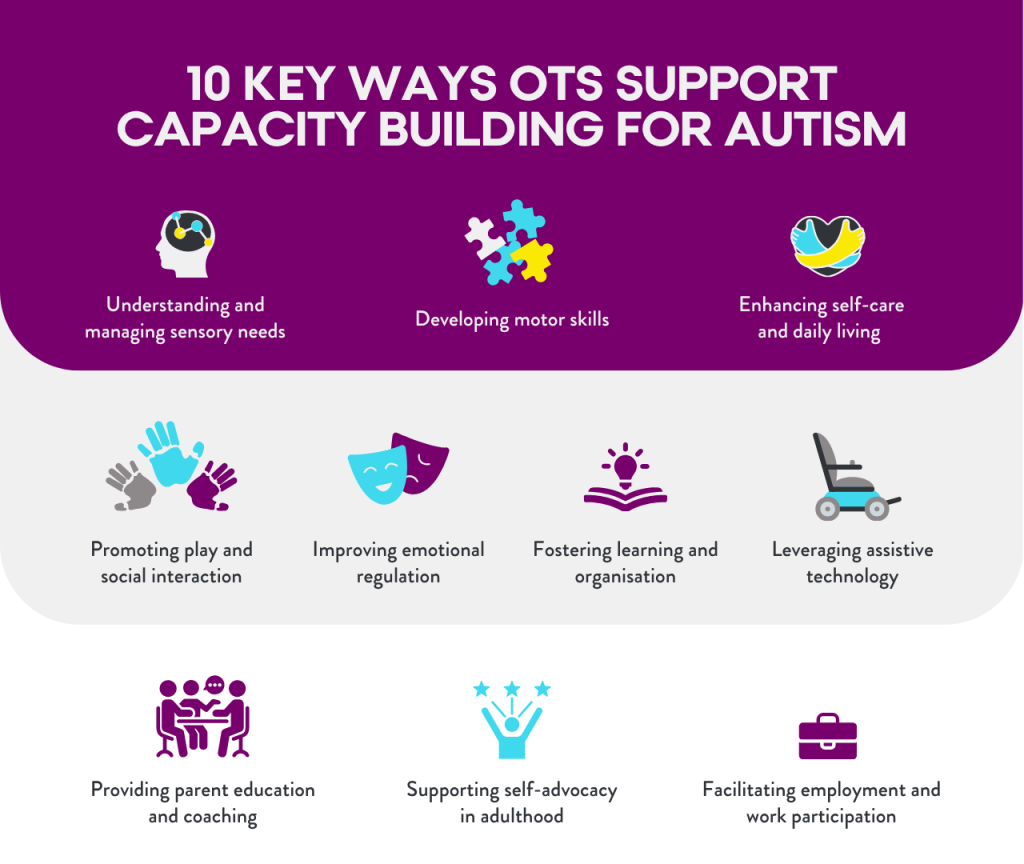
1. Understanding and Managing Sensory Needs
Many people living with autism experience the world in a unique sensory way. OTs help identify sensory preferences and challenges, then create strategies that make daily activities more comfortable. This might include adapting routines, adjusting the environment, or using calming tools.
2. Developing Motor Skills
From tying shoelaces to joining a sports game, fine and gross motor skills are essential for everyday participation. OTs design fun and practical activities to strengthen these skills and build confidence.
3. Enhancing Self-Care and Daily Living
Self-care is central to independence. OTs support participants with skills like grooming, toileting, and sleep. They also guide families through specific interventions:
- Feeding: Coaching parents on mealtime strategies to reduce food selectivity and create positive routines.
- Sleep: Supporting families to develop calming routines and healthy sleep habits.
4. Promoting Play and Social Interaction for younger participants
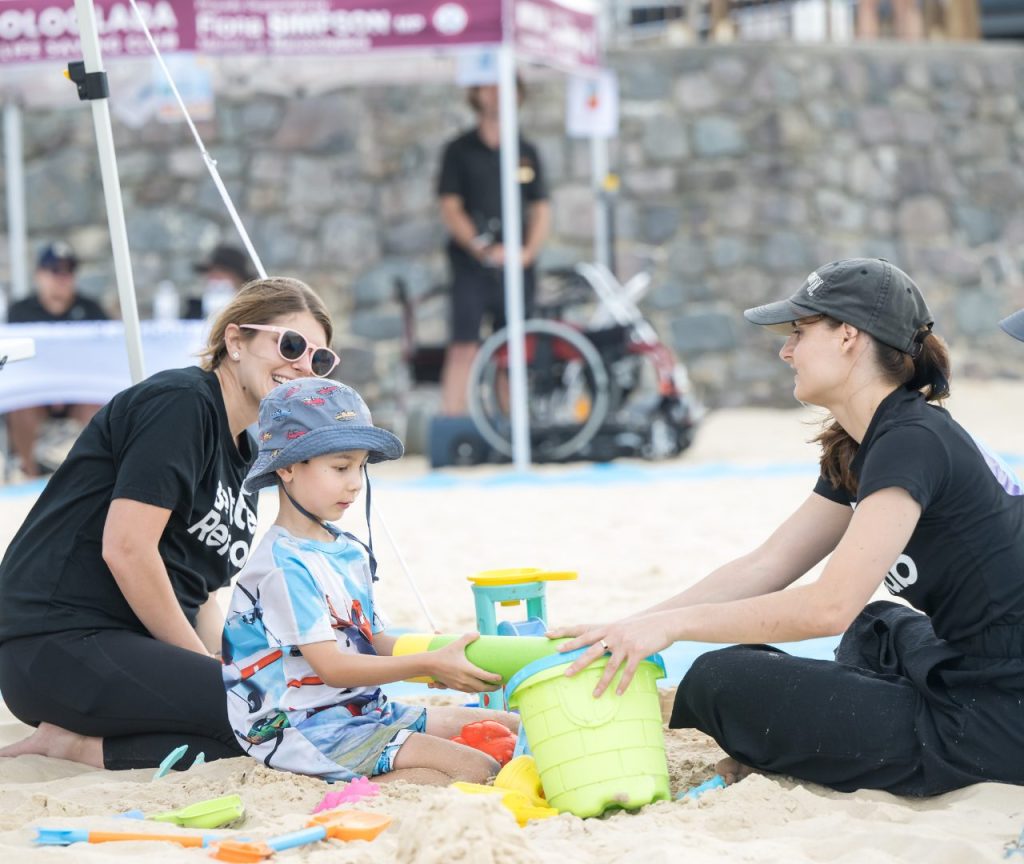
Play is more than fun, it’s how children learn, build relationships, and practice communication. For younger participants, OTs encourage social play in both school and clinic settings, using group activities and peer support to build lasting skills.
5. Improving Emotional Regulation
Managing emotions is a daily challenge for many people with autism. OTs teach practical techniques for recognising feelings, calming the body, and responding to stress in positive ways.
6. Fostering Learning and Organisation
At school and beyond, OTs support participants to stay organised, follow routines, and engage in learning. Tools like visual schedules and social stories can smooth transitions and improve focus.
7. Leveraging Assistive Technology
Technology can open doors to independence. OTs integrate tools like noise-cancelling headphones, adaptive keyboards, and scheduling apps to support learning, social interaction, and daily living skills.
8. Providing Parent Education and Coaching
OTs know that families are the most important part of a child’s world. Through coaching, they equip parents and carers with strategies to continue supporting skill development at home. This helps families feel more confident and empowered.
9. Supporting Self-Advocacy in Adulthood
As children grow older, OTs help them learn to advocate for their needs, whether that’s asking for classroom adjustments or identifying strengths that make them unique. With the guidance of our OT’s, we assist younger participants move into adulthood, helping them create a more empowered life as adults living with autism.
10. Facilitating Employment and Work Participation
For adults living with autism, OTs provide workplace-based programs to build confidence, independence, and long-term career success. This might include practicing job skills, using technology supports, or problem-solving workplace challenges.
How Do OTs at Better Rehab Work Within the NDIS?
Under the NDIS, occupational therapy is often funded under capacity building supports. OTs conduct detailed assessments to understand strengths, challenges, and goals. They then recommend therapies, equipment, or modifications that are considered reasonable and necessary. This means every plan is highly individualised. The focus is always on what matters most to the participant: gaining independence, building confidence, and living life on their own terms.
Why a Neurodiversity-Affirming Approach Matters
Better Rehab’s OTs take a strengths-based, neurodiversity-affirming approach. This means celebrating what makes each person unique, valuing their interests, and creating supports that enhance, rather than change, their identity.
By focusing on strengths, OTs not only build skills but also support mental health, resilience, and belonging.
Bringing It All Together
NDIS occupational therapy for autism is about more than therapy sessions, it’s about creating opportunities for growth, independence, and joy. Whether through sensory support, play, assistive technology, or self-advocacy, OTs can help participants and families take meaningful steps toward their goals.
If you’re a Support Coordinator, you play a vital role in connecting participants with the right therapy team. By partnering with experienced OTs who understand capacity building for autism, you can help participants achieve outcomes that truly change lives.
At Better Rehab, our clinicians are here to support participants and families across Australia with warmth, expertise, and care. Together, we can build the skills that last a lifetime.


