



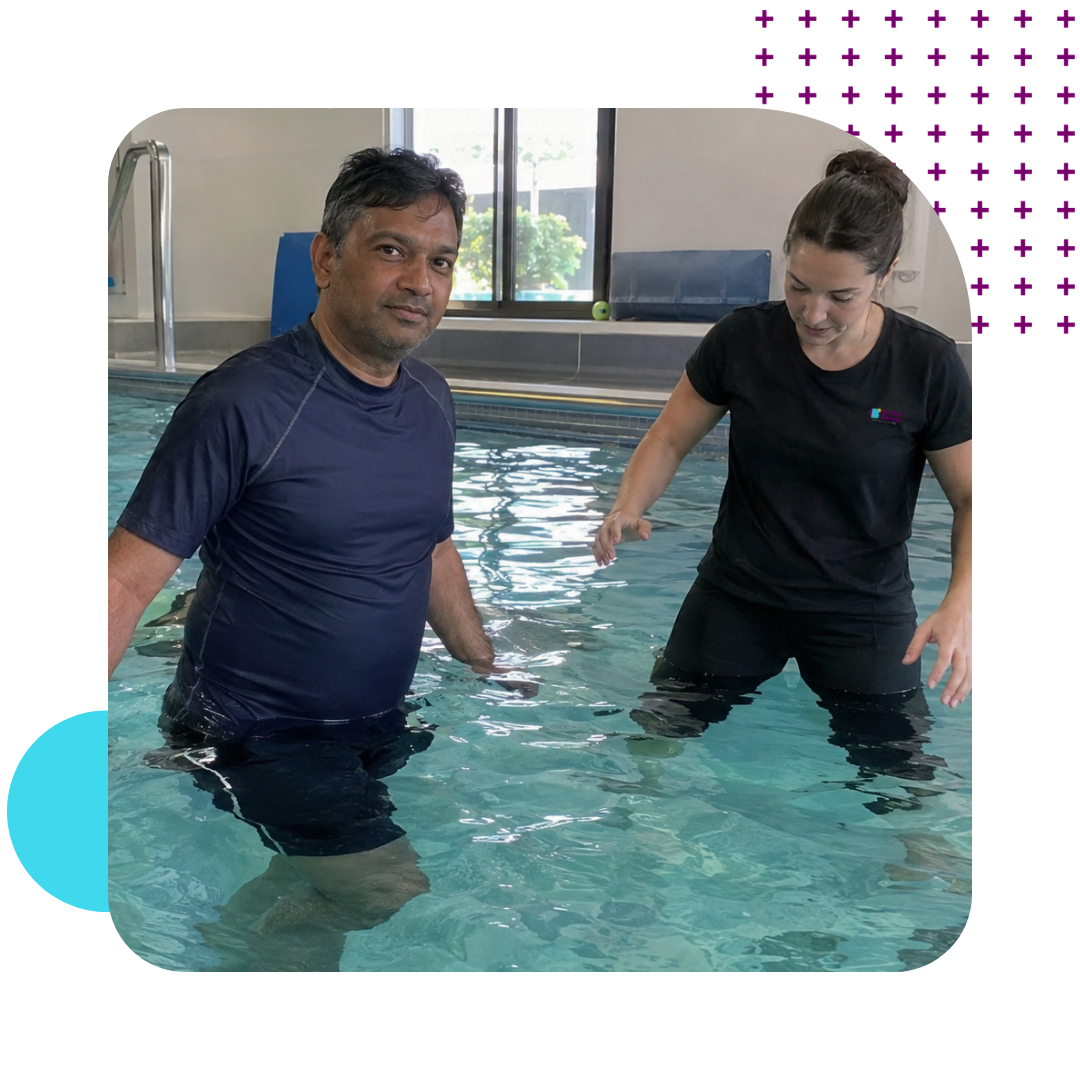
Hydrotherapy is exercise in water, and it can be a good way to build strength, improve mobility and feel more confident moving.
If you’re an NDIS participant and land-based exercise is hard or uncomfortable for you, working in the pool may give you another way to reach your physical and functional goals. At Better Rehab, our Exercise Physiologists can include hydrotherapy in your individualised exercise program. The aim is to build your physical capacity so you can do more for yourself in everyday life.
What is hydrotherapy?
Hydrotherapy means exercising in water to help with movement, strength, balance and physical function. Water takes some of the load off your body, so certain movements are easier to do. It also pushes back against you as you move, which makes it useful for strength work. That combination suits participants who have trouble with movement or find some land-based exercises difficult.
It isn’t right for everyone, though. Your Exercise Physiologist will look at your needs and help you decide whether water-based exercise, land-based exercise or a mix of both makes sense.
How can Exercise Physiology and hydrotherapy help you?
Exercise Physiologists use evidence-based exercise to improve physical function, build capacity and help you take part in everyday activities.
If hydrotherapy is a good fit, your Exercise Physiologist will build a program around your abilities, your disability-related needs and your goals.
Hydrotherapy may help you:
- Get stronger and more mobile, so walking, standing, transfers and everyday movement feel easier
- Work on balance and coordination by practising controlled movements with the water supporting you
- Build fitness and endurance, so you can keep going for longer in physical activities
- Move more comfortably when pain, reduced mobility or low exercise tolerance makes exercise on land hard
- Feel more at ease taking part in exercise and physical activity
Your Exercise Physiologist will also track your progress and change your program as your goals and needs change.
What NDIS goals can hydrotherapy support?
Under the NDIS, Exercise Physiology is a capacity building support. In other words, it’s about developing the physical abilities and confidence that help you become more independent.
Hydrotherapy may be part of a program aimed at goals like:
- Walking or standing more independently
- Better balance during everyday activities
- Doing transfers with more confidence
- Building strength and endurance
- Keeping your physical capacity and flexibility
- Taking a bigger part in community activities
For example, getting stronger and steadier in the pool may help with a wider goal of moving around more confidently at home or out in the community.
The exercises themselves are only part of the picture. What matters is how the progress you make in the water carries over to the things you want to do day to day.
Where does Better Rehab provide hydrotherapy?
Our Exercise Physiologists can offer hydrotherapy as part of an individualised Exercise Physiology service, depending on what’s available locally and whether it suits you clinically.
Sessions may take place at:
- Community swimming pools
- Aquatic centres
- Dedicated hydrotherapy facilities
Before you start, your Exercise Physiologist will look at your goals, how accessible the pool is, whether you can get in and out safely, any help you might need and which facilities are available.
Whether hydrotherapy is available, and how it’s delivered, will depend on where you live and your circumstances.
Is hydrotherapy suitable for everyone?
No, hydrotherapy doesn’t suit every participant. Your Exercise Physiologist will take into account your physical abilities, mobility needs, medical considerations and functional goals before deciding whether exercising in water is a good idea.
Safety and access matter too. For example, you may need help getting into or out of the pool, or support during your sessions. Sometimes land-based exercise is the better choice. Your Exercise Physiologist may also suggest a mix of the two. The goal is to find the type of exercise that works best for your needs and goals.
Can hydrotherapy be funded through the NDIS?
Hydrotherapy delivered as part of Exercise Physiology may be considered when it relates to your disability-related needs and NDIS plan goals and meets the funding rules.
Before you start, check that the service is right for your plan and that you understand any extra arrangements. You may need to organise and pay for pool entry, transport or support worker costs separately. Your Support Coordinator or support team can help you sort these out before your first session.
Working towards more independence with Better Rehab
Our Exercise Physiologists help you build physical capacity, confidence and independence through exercise programs set around your own goals.
Whether your program uses hydrotherapy, land-based exercise or both, we keep the focus on the outcomes you care about.
That could be moving more easily, being able to exercise for longer, finding everyday tasks easier or getting out in your community with more confidence.
Wondering whether hydrotherapy could help with your goals?
Talk to Better Rehab about your Exercise Physiology needs, and we can tell you whether hydrotherapy is suitable and available for you.


