



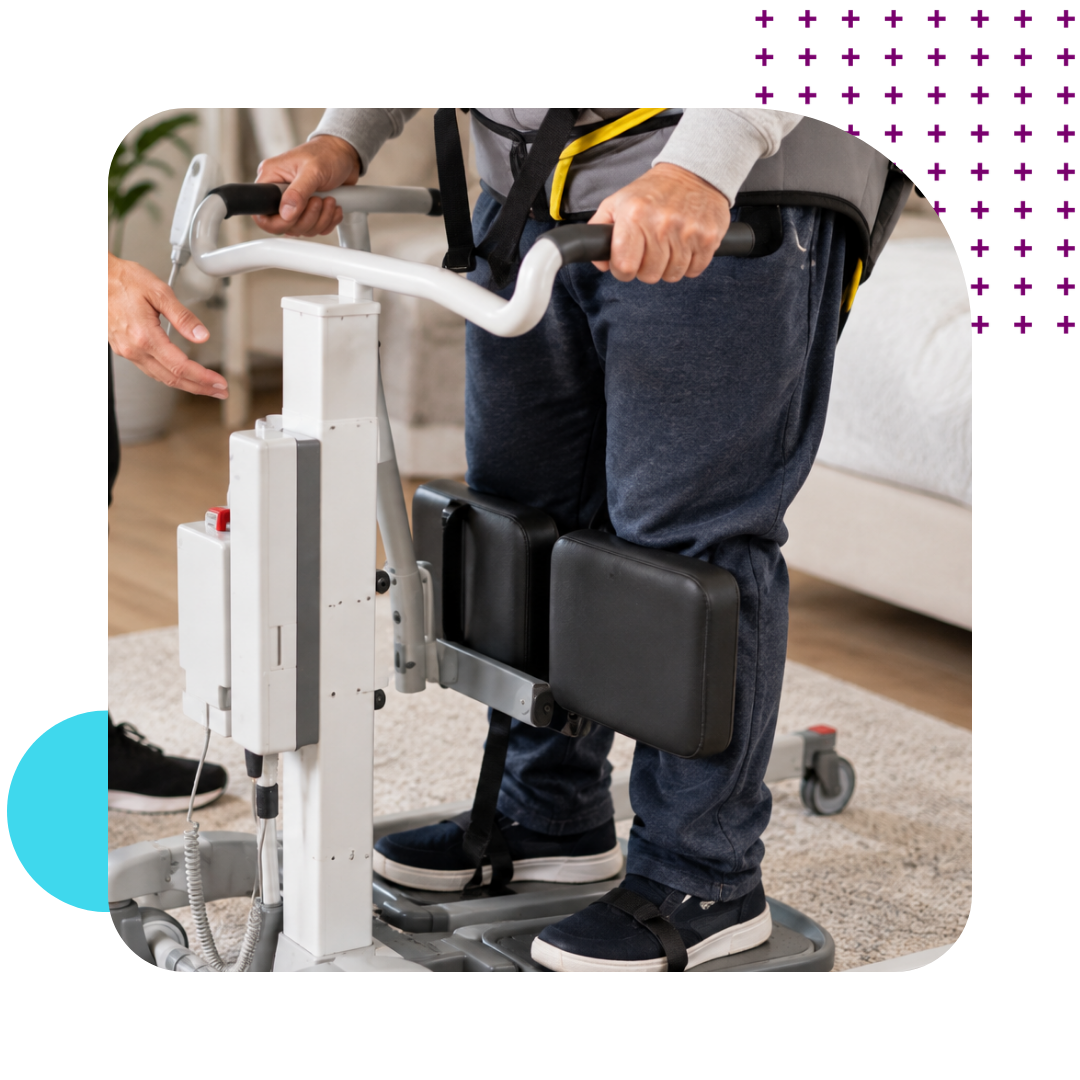
Brett used a standing transfer lifter every day for a year. Huntington’s disease was slowly affecting his strength and mobility, but with regular physiotherapy reviews and help from his carers, he kept using it safely.
As his muscle weakness increased, standing transfers got harder. The lifter that had suited him was starting to put more physical strain on Brett and his support workers.
His Better Rehab physiotherapist saw that something needed to change. Through early planning and collaboration, Brett’s allied health team was able to identify a safer option and arrange for a new floor hoist to be delivered in less than six weeks.
When Standing Transfers got harder
Huntington’s disease is a progressive neurological condition that can affect movement, thinking and behaviour. As the condition progresses, everyday activities can become more challenging, and the level of support a person needs may change.
Over the course of a year, Brett’s physiotherapist regularly reviewed his physical function and mobility, helping him continue using a standing transfer lifter for as long as it remained appropriate.
The lifter allowed Brett to participate in standing transfers with assistance from his support workers. However, as his strength declined, these movements became increasingly difficult to manage safely.
His support workers were also experiencing greater physical strain when assisting with transfers.
Through ongoing reviews, Brett’s physiotherapist was able to recognise when his existing equipment was no longer meeting his needs. The team didn’t wait for things to get worse. They started looking for a safer alternative.
Planning the Next Step Together
Finding the right solution meant looking beyond Brett’s mobility alone. His physiotherapist worked closely with his occupational therapist and support workers to understand how his changing physical abilities were affecting his daily care.
Together, they agreed a floor hoist was a more suitable option.
Unlike a standing transfer lifter, a floor hoist supports a person during transfers without requiring them to stand. This made it a more appropriate choice as Brett experienced increasing muscle weakness.
The team arranged an equipment trial to check it was suitable. They then wrote a clinical support letter setting out Brett’s functional needs and why they recommended the hoist. With the trial done and the paperwork ready, the order could go ahead.
Earlier planning helped too. Funding was already available in Brett’s NDIS plan, so the team avoided extra delays when his needs changed.
From spotting the need to trialling, documenting, ordering and delivering the floor hoist, the whole process took less than six weeks.
A Safer Option for Brett and His Support Team
The transition to a floor hoist meant Brett could receive transfer assistance that better suited his changing physical abilities, without relying on standing movements that had become increasingly difficult.
It also made an important difference to the people supporting him each day. Using the floor hoist reduced the manual handling strain on his support workers and helped lower the risk of injury during transfers.
Although changing a piece of equipment may seem like a small adjustment, it can have a meaningful impact on how someone is supported throughout the day. The timely equipment change for Brett helped maintain continuity in his daily care.
Supporting Brett as His Needs Change
People often link physiotherapy with building strength and improving movement. But for people living with a progressive condition, like Huntington’s disease, the work can look different.
Regular physiotherapy reviews can help clinicians understand how a participant’s abilities are changing, identify when equipment or care arrangements are no longer suitable, and work with their support network to plan what comes next.
Brett’s story shows that physiotherapy isn’t always about doing more or moving further. It’s a valuable reminder for families, carers and clinicians that conversations about changing mobility needs don’t have to wait until something becomes unsafe. Sometimes, it’s about recognising when someone’s needs are changing and helping their support change with them.
And like in Brett’s case, often clinicians don’t work alone. Brett’s physio, occupational therapist and support workers worked alongside each other, sharing what they were seeing, so the team could respond quickly and get the right equipment in place without delay. A new hoist may look like a small change but for Brett and the people who support him, it made an important part of everyday care safer.
If you’d like to learn more about how our physiotherapists work alongside occupational therapists, support workers and families, visit our physiotherapy page. And if you have a participant who could benefit from a physiotherapy review, submit a referral here.


