


If you or someone you care about is finding that certain behaviours are getting in the way of everyday life, you are not alone. For many people, behaviours are a way of communicating something important, like a want, an unmet need, or a reaction to what is happening in the environment.
With the right behaviour support funding, you can access positive behaviour support that focuses on your quality of life, your goals, and what matters to you. At Better Rehab, our behaviour support practitioners can work directly with participants and collaborate with their families and carers to reduce behaviours of concern and build lasting skills.
This guide explains how behaviour support funding works, what it covers, and how you can use your NDIS plan funding to access the right support through registered providers.
Where Behaviour Support Sits in NDIS Plan Funding
In the NDIS, behaviour support is usually funded under Capacity Building – Improved Relationships. This funding is specifically used to pay for the development of behaviour support plans and the training of people who support you. In the newer PACE planning system, funding will be categorised under 20 Behaviour Support.
What Behaviour Support Funding Covers
Your behaviour support funding can be used for specific professional activities, including:
Functional Behaviour Assessments
This is the investigation into the “why” behind a behaviour by looking at what happens before, during, and after the event.
Behaviour Support Plans
Funding supports:
- Interim Plans (within one month) for immediate safety
- Comprehensive Plans (within six months) for long-term skill building
It is important to note that not everyone will need an Interim Behaviour Support Plan. The practitioner will assess each situation and decide whether an interim plan is clinically required to support immediate safety. However, when behaviour support is funded under Improved Relationships, participants should receive a Comprehensive Behaviour Support Plan, which focuses on long-term skill building and meaningful, sustainable outcomes.
Training and Monitoring
Funding also covers training and education for family members, carers, and support workers on how to use the strategies in the plan safely and effectively.
NDIA Requested Reports
Funding can cover reports required at the start or review of a plan to measure functional outcomes.
Other Operational Supports
NDIS funding may also include:
- Non-face-to-face support (research linked to your needs and writing reports for other providers about skill development progress)
- Provider travel (travel time and non-labour costs such as vehicle running fees, road tolls, and parking)
- Telehealth (video or phone sessions if you agree and it maintains a high standard of care)
- Short notice cancellations (providers may claim up to 100% of the agreed fee if there is less than two clear business days’ notice for most specialist supports)

When Behaviour Support Funding May Not Apply
While behaviour support plays an important role for many participants, there are situations where the NDIS will not be able to provide funding. This is usually because the support sits within the responsibility of another service system or does not meet the threshold for specialist intervention.
Medical and Acute Health Needs
The NDIS does not fund medical or acute supports that are provided by the health system, including Medicare-covered treatments, hospital care, or general health services.
Common or Developmentally Typical Behaviours
Age-appropriate or non-impactful behaviours that do not significantly affect daily life, safety, or relationships may not qualify for specialist behaviour support funding.
Supports Funded by Other Systems
Supports related to education, vocational training, or recreation are not funded by the NDIS and sit within other service systems.
Day-to-Day Living Costs
Everyday expenses that are not directly related to disability, such as entry fees or tickets, are not covered by the NDIS.
The Mandatory Rules for Behaviour Support Funding
There are strict regulations about who can deliver funded behaviour support.
Registered Providers Only
Participants must use a registered specialist behaviour support provider, even if their NDIS plan is otherwise self-managed or plan-managed.
Approved Practitioners
The practitioner must be considered suitable by the NDIS Quality and Safeguards Commission. At Better Rehab, you can feel confident knowing our team of registered behaviour support practitioners are Commission-approved professionals equipped with the right qualifications and experience needed to deliver safe, person-centred positive behaviour support.
Price Limits
The national price limit for Specialist Behavioural Intervention Support is currently $232.99 per hour.
Travel and Non-Labour Costs
Providers can claim for travel time (up to 30 or 60 minutes depending on location) and non-labour costs like vehicle running fees, as long as these are agreed in a service agreement.
Eligibility for NDIS Behaviour Support Funding
Eligibility for NDIS behaviour support funding is determined by whether you need the support as a direct result of your disability. The NDIA assesses each request to ensure it meets the “reasonable and necessary” criteria.
To be eligible, the support must:
- Be disability-related and linked to permanent or significant functional impairment
- Meet funding standards (value for money, likely to be effective and beneficial, and not include day-to-day living costs unrelated to disability)
- Align with the goals and aspirations in your NDIS plan
Better Rehab’s Positive Behaviour Support practitioners can help you navigate NDIS requirements, including completing functional behaviour assessments and developing tailored behaviour support plans that focus on your goals. Together, we’ll work with you and your support coordinator in funding requests or plan reviews.
How Need Is Identified and Evidenced
The NDIA may learn about your need through plan meetings, check-ins, or reports from family, guardians, schools, or employers. Evidence may include:
- Professional reports from allied health professionals (such as occupational therapists or speech pathologists)
- Safety data (incident reports or court reports regarding behaviours of concern)
- Specialist assessments or recommendations reports
Where the Funding Appears in Your Plan
Once eligibility is established, behaviour support funding is usually placed under Improved Relationships within Capacity Building supports. In the PACE system, it appears under Behaviour Support. Registered specialist providers must be used regardless of plan management type.
Behaviour Support Funding for Children Under 9
For children younger than nine who have a developmental delay or disability, positive behaviour support can be accessed through the Early Childhood Approach (ECA).
A formal diagnosis is not always required to request funding. Eligibility focuses on functional need, such as whether the child needs help with emotional regulation, communication, or managing behaviours that make daily life difficult for the child and their family.
Two Ways Funding May Be Provided in the ECA
1) Improved Relationships Funding
This is used for intensive, specialised interventions and can only be used by NDIS Behaviour Support Practitioners. It covers:
- A formal Behaviour Support Plan (including safety measures or regulated restrictive practices if required)
- Training for family members and educators to implement strategies safely
2) Early Intervention Supports (Other Professional)
If a child’s plan includes flexible Early Intervention Supports, it may be used more broadly:
- An “Other Professional” can provide assessment and training, as long as they meet the requirements set by the NDIS
- A Family Action Plan may be developed instead of a formal specialist behaviour plan
- The focus includes parent training, emotional regulation, and coordinating support across home and school
To access ECA behaviour support, families can contact an Early Childhood Partner, share examples of how behaviours affect daily life and wellbeing, and request that Improved Relationships be added to the plan or engage a provider to recommend support hours to the NDIA planner.
Better Rehab supports children under nine to access behaviour support funding through a child-led approach that focuses on everyday needs and goals, using assessments and Family Action Plans to help families and support coordinators provide clear evidence for funding.
Our clinicians delivering this support complete a dedicated ECA Education and Certification pathway, led and supervised by Board Certified Behaviour Analysts, ensuring they have the specialised skills required to deliver high-quality support.
How to Access Behaviour Support Services Using Your NDIS Plan Funding
To access behaviour support, you’ll follow a structured process so the right supports are funded and delivered by qualified professionals.
1) Confirm Behaviour Support Funding in Your Plan
Look for:
- Improved Relationships (Capacity Building), or
- Behaviour Support (PACE plans)
If behaviour support isn’t included but you need it due to your disability, you can contact your Local Area Coordinator (LAC), Early Childhood partner, or NDIA planner to request a plan review. The NDIA may fund an initial assessment to determine the amount of support required.
2) Choose a Registered Specialist Provider
You must use a registered specialist behaviour support provider, even if you self-manage or plan-manage.
You can use the NDIS Provider Finder tool by entering your postcode and selecting “behaviour support”, or ask your support coordinator, local area coordinator, recovery coach, or early childhood partner for recommendations.
3) Set Up the Formal Agreements
This includes:
- A written service agreement outlining supports, costs (up to the price limit), responsibilities, and how to end the agreement
- Your written consent for the provider to speak with others in your support network (such as family, doctors, or teachers)
For setting aside funding:
- PACE plans: record the provider under “My providers” or contact the NDIA to link providers
- Standard plans: use a Service Booking in the myplace portal
4) Access for Children Under 9
Families can contact an Early Childhood partner and share examples of how behaviour impacts daily life. If there is unstated Early Intervention Therapy funding, a practitioner may be engaged as an “Other Professional” to assess and develop a Family Action Plan.
Choosing the Right Positive Behaviour Support Provider
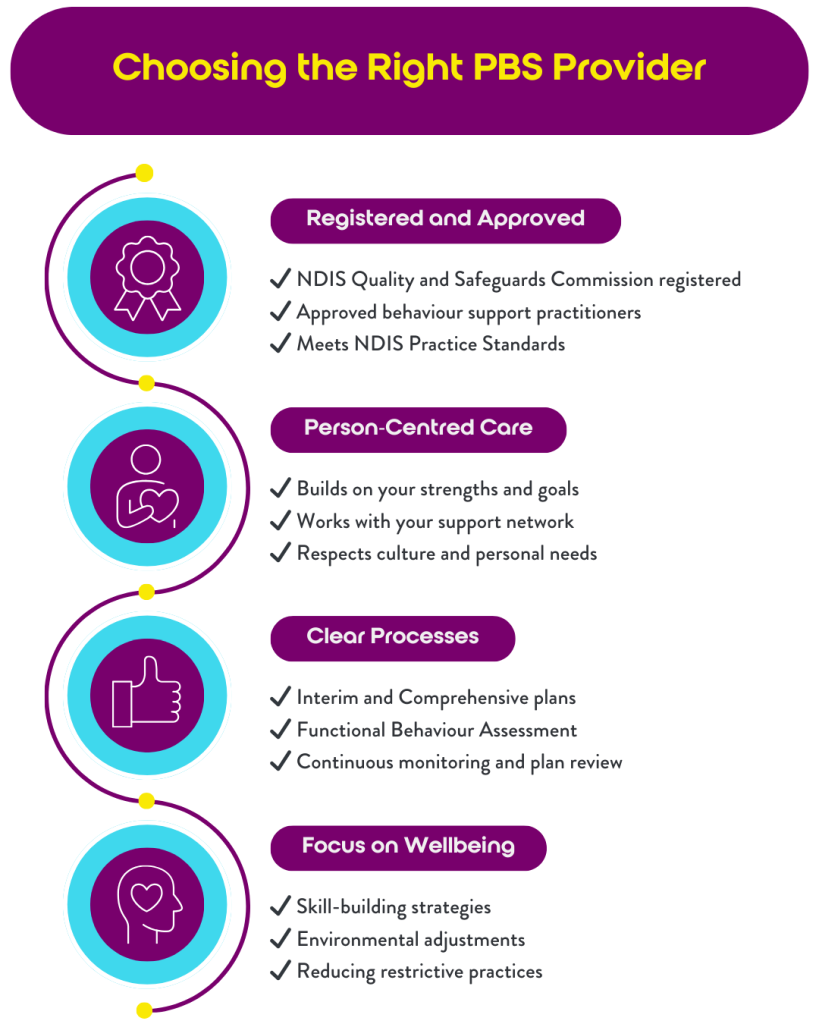
A high-quality provider combines the right registration and professional standards with a person-centred approach. At Better Rehab, our team is ready to work alongside your staff, participants, and their support networks to deliver person-centred, practical support.
Mandatory Registration and Suitability
The provider must be registered with the NDIS Quality and Safeguards Commission. They should use behaviour support practitioners assessed as suitable by the NDIS Commissioner.
A Person-Centred and Collaborative Approach
Look for providers who:
- Meet with you directly and help you feel safe to ask questions
- Build on your strengths, interests, and what matters to you
- Work with your family, carers, support workers, and allied health professionals (with your permission)
- Consider your culture, religious beliefs, and personal circumstances
Professional Processes and Timelines
You should expect a structured service agreement and standard timelines:
- Interim plan within one month – if required
- A Functional Behaviour Assessment process
- A comprehensive plan within six months based on assessment findings
- Monitoring of plan and continuous review at least 12 months or sooner
- Training supports in implementing the plan
Focus on Quality of Life and Skill Building
A quality provider does not use punishment or strategies that hurt you. They focus on proactive strategies, environmental changes, skill development, and when applied, reducing restrictive practices over time.
Examples of Key Questions to Ask Providers
- What experience do they have with your type of needs?
- How do they usually provide services?
- Can they explain how their strategies represent the best use of your NDIS plan funding?
Choosing a provider can feel like hiring a professional navigator. You want someone with the right registration, but also someone who sits beside you, listens to your goals, and supports your wider team to work in the same positive direction.
The Role of a Guardian or Nominee in Behaviour Support
In positive behaviour support, a guardian or nominee may play an important role in representing your interests and supporting your rights.
This can include:
- Helping define needs in conversations with the NDIA
- Providing written consent for providers to speak with your support network
- Being consulted or asked to provide consent, where required by state or territory laws, if restrictive practices are considered
- Participating in plan meetings and reviews
- Supporting service agreements and cost approvals in some settings (such as Supported Independent Living)
How Support Coordinators Help Make Behaviour Support Funding Work
Support coordinators are often the link between you, the NDIA, and behaviour support providers. Their role can include:
Securing and Managing Funding
If you don’t have Improved Relationships funding, your support coordinator can help request a plan review and provide evidence to the NDIA when needed.
In emergencies, including where unauthorised restrictive practices are being used, support coordinators can help notify the NDIS Commission and NDIA to request the right funded supports.
Finding and Engaging Registered Providers
Support coordinators help you find registered providers, set up service agreements, and make sure the right supports are in place.
Coordinating the Plan Across Your Life
Support coordinators play an important role in helping bring all supports together, especially when participants are working with multiple providers. They can coordinate meetings, support clear communication across different support teams, and help ensure everyone is working toward the same goals using consistent strategies.
Levels of Support Coordination
The level of support depends on your plan:
- Level 1: Support Connection
- Level 2: Coordination of Supports
- Level 3: Specialist Support Coordination for highly complex needs or high-level risks
You can think of your support coordinator as a project manager. The behaviour support practitioner creates the plan, and the support coordinator helps ensure funding is in place, providers are connected, and everyone is following the same approach.
Why Choose Better Rehab as Your Positive Behaviour Support Provider?
Better Rehab offers services across Australia and supports your goals of improving quality of life, reducing behaviours of concern and building lasting skills.
Our approach includes:
- Person-centred behaviour support for adults and children, ensuring compatibility of support tailored to their goals
- Working with participants, their families and support networks so support is aligned
- A child-led approach that supports young participants to learn and grow at their own pace
- Strategies that support independence and improve their quality of life
- Services including functional behaviour assessment, behaviour support plans, and restrictive practices
Better Rehab is a registered multidisciplinary NDIS allied health provider. We can offer PBS services in isolation, or as one component of an overall plan.
Using Behaviour Support Funding to Support Your Goals
Behaviour support funding exists to help you access skilled, registered professionals who can work with you to understand what is happening, develop a plan that fits your life, and build positive strategies that support your goals.
With positive behaviour support and the right NDIS plan funding in place, you can create a clearer path toward safety, skill-building, stronger relationships, and a better quality of life, supported by a team that respects your rights and your individual needs.
At Better Rehab, we support adults, teens, or younger children with a compassionate, collaborative approach. We focus on what matters most to each participant, from achieving personal goals to building independence in everyday life. Enquire today to find out how we can support you or your loved one.


